
Rising Prices of Compound Feeds in Tunisia: +20 to +40 DT/Tonne

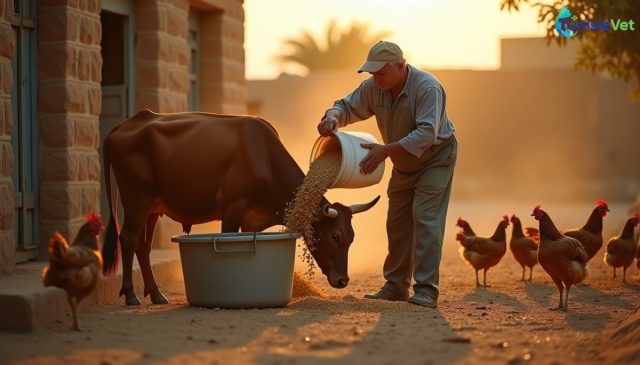
Compound feed prices are climbing across Tunisia, affecting all livestock farmers. Prices have risen by roughly 20 dinars per tonne for cattle and sheep feeds, 30 dinars for poultry feed, and up to 40 dinars per tonne for turkey feed. This article examines the real scale of these increases across different livestock sectors, explores their underlying causes, and offers practical solutions to keep your herd properly nourished without straining your finances.
1. The extent of price increases across livestock sectors
This latest round of compound feed price hikes does not affect all livestock sectors equally. The more demanding an animal's nutritional requirements and the faster its growth rate, the more expensive ingredients (proteins, energy, mineral balancers) its feed formula contains, and the more sensitive it is to raw material price pressures.
| Sector | Price increase recorded | Relative impact |
|---|---|---|
| Cattle and sheep | +20 dinars/tonne | Moderate, mitigated by mixed rations with forage |
| Poultry (chickens) | +30 dinars/tonne | High, as compound feed is almost the sole nutritional source |
| Turkey | +40 dinars/tonne | Very high, protein-rich formulas and significant consumption |
For cattle and sheep, compound feed typically complements locally produced forage or pasture, which partly absorbs the impact of feed price increases. For poultry and especially turkeys, however, compound feed makes up virtually the entire daily ration, so any price rise immediately and fully translates into higher production costs.
2. Why are compound feed prices rising so steeply?
Several mechanisms typically explain this type of industrial feed price increase, even without additional detailed data:
- Cost of imported raw materials: maize, soy, and certain meal products used in compound feeds are largely imported, exposing their prices directly to international market fluctuations and exchange rate volatility.
- Transport and energy costs: maritime shipping, fuel, and electricity required for manufacturing and distribution of feeds all weigh on the final price per tonne.
- Availability of inputs on the local market: when supply of forage cereals or meal products tightens, manufacturers pass the scarcity onto their prices.
- Formula specificity by sector: turkey feeds, richer in high-quality animal or vegetable proteins, are structurally more expensive to produce than ruminant feeds, explaining why price increases are steeper in this sector.
These factors often combine, which is why the price increase is not uniform across sectors but proportional to the complexity and cost of the formula used.
3. Real consequences for Tunisian livestock farmers
For a farmer, a price rise of 20 to 40 dinars per tonne directly translates into an increase in production cost per animal. The most common consequences observed in these situations include:
- Margin compression, particularly for poultry and turkey farmers where feed represents the bulk of operating costs.
- Temptation to reduce feed quantities distributed, which can compromise growth, milk production, or laying rates if not offset intelligently.
- Passing the increase onto selling prices of animals, meat, milk, or eggs, with a time lag that strains the farmer's cash flow.
- Heightened risk for small holdings, less able to absorb a cost shock than integrated operations that control part of their supply chain.
In this context, it is essential never to sacrifice nutritional quality of rations to save money in the short term: under-dosed feed leads to productivity losses that often cost more than the savings achieved.
4. How to adapt your livestock operation to rising feed prices
Facing rising compound feed prices, several levers can limit the impact without harming herd health.
Optimise the ration rather than reduce it
- Have a livestock nutritionist or veterinarian formulate or adjust the ration to use compound feed more strategically, supplementing locally available forage.
- For cattle and sheep, prioritise roughage (hay, straw, pasture) as the ration base, reserving compound feed for critical phases: late pregnancy, lactation, and finishing.
- For poultry and turkey, verify the distributed formula by age and production stage to avoid wasting unnecessarily rich feed at stages where it is not required.
Better manage storage and distribution
- Store compound feed protected from moisture and rodents to avoid any loss of volume or nutritional value after purchase.
- Calibrate distributed quantities to actual needs of each batch or flock, rather than distributing uniformly.
- Regularly compare offers from local compound feed suppliers to secure the best value for money.
Seek professional guidance
Regular veterinary follow-up remains the best guarantee for adjusting feed without compromising animal health, especially during periods of feed price tension. It is recommended to consult a veterinarian specialising in livestock farming to establish a nutritional plan adapted to each species and production stage.
5. Cattle, sheep, poultry, turkey: differentiated strategies
Each sector requires a specific response to rising compound feed prices.
- Cattle: leverage the complementarity between on-farm forage and compound feed, reserving the latter for periods of increased requirements. Follow-up with a veterinarian for cattle helps calibrate inputs without excess.
- Sheep: maximise pasture and locally available agricultural by-products, particularly outside breeding and gestation periods. A veterinarian for sheep can advise on periods when compound feed is truly essential.
- Poultry: monitor feed conversion ratio (amount of feed required per kilo of production) to detect any waste and adjust inputs by bird age.
- Turkey: as the sector most affected by price increases, it is particularly worthwhile to compare available formulas and seek technical support to avoid over-supplementation during finishing phases.
Summary
- Compound feed price increases vary significantly by sector: more moderate for cattle and sheep, heavier for poultry and especially turkey.
- Likely causes combine imported raw material costs, transport, energy, and formula complexity.
- Optimising rations, better storage, and adjusting quantities to actual needs limit financial impact.
- Veterinary support makes it possible to adapt feed without sacrificing herd health or productivity.
- Regularly comparing local suppliers remains a useful habit during feed price tension periods.
Frequently asked questions
Why do turkey feeds increase more than cattle feeds?
Turkey feeds contain formulas richer in proteins and high-value nutritional ingredients, often imported. Cattle, conversely, can rely on local forage that reduces the proportion of compound feed in their total ration.
Should I reduce compound feed quantities to save money?
Sharply reducing distributed quantities risks penalising growth, egg laying, or milk production. It is better to adjust the formula with a professional rather than blindly cut back on inputs.
What's the best way to limit the impact of rising feed prices on livestock farming?
Combining local forage, optimised storage, and regular technical follow-up limits rising charges. Comparing suppliers and consulting a veterinarian to adjust rations remains the most effective approach.
Facing this rise in compound feed prices, professional support remains your best protection for preserving both herd health and farming profitability.
🎬 Watch the video
Leave a comment
Be the first to comment on this article.
