
Dog Breeds: 8 Questions Every Owner Asks Themselves

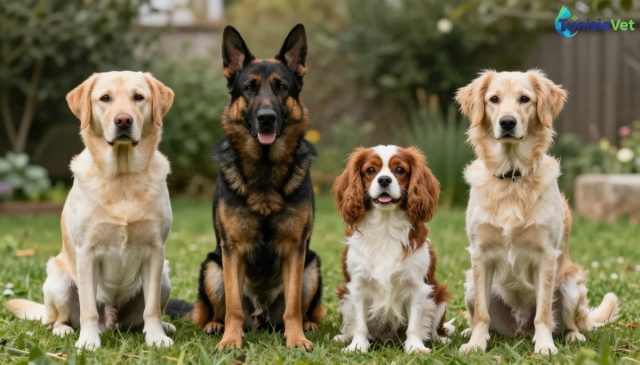
There is no single best of the dog breeds: the right one is the breed that fits your home, your daily routine and your budget. This practical guide answers the most common questions: how to choose, what to think about mixed breeds, what each size needs, and when to seek veterinary advice. The answers are concrete and can be applied today.
The TunisieVet app to care for your pet
Vets, adoption and products


1. How do you choose among dog breeds?
Start by looking at your own lifestyle, not at photos. Each breed was selected for a job: guarding, herding, hunting or companionship. That history explains how the dog behaves today.
The criteria that really matter
- Time available: walks, play and training every day.
- Housing: apartment or house with a fenced garden.
- Family: young children, other pets, elderly people.
- Climate: a dog with a thick coat or a very short muzzle copes poorly with intense heat.
- Budget: food, healthcare, grooming, and possibly insurance.
2. Which breeds suit which lifestyle?
Here are some general guidelines. Every dog is an individual, and training matters as much as genetics.
| Profile | Example breeds | Good to know |
|---|---|---|
| Athletic, active | German Shepherd, Border Collie, Labrador | Needs exercise and mental challenges |
| Apartment living | Cavalier King Charles, Bichon, Chihuahua | Small size, but training is essential |
| Family with children | Labrador, Golden Retriever | Sociable, but always supervise play |
| Hot climate | Sloughi, Saluki, short-coated dogs | Provide shade and cool water |
3. Purebred, mixed breed or adopted dog: what should you choose?
A purebred dog offers predictability in size and temperament, but some breeds are prone to hereditary diseases. A mixed-breed dog is often robust, though there are no absolute rules. In both cases, health and socialisation matter more than pedigree.
If you are undecided, consider adopting an animal: many dogs are waiting for a family, and shelter staff can describe their real personality.
4. Do needs change with size?
Small dogs
They generally live a long time and need regular dental care. Their fragility calls for caution during falls and rough play.
Large dogs
They grow quickly: avoid intense exercise and repeated jumping during growth, to protect the joints. Monitor their weight throughout their lives.
Short-muzzled breeds
Bulldogs and pugs breathe with difficulty. Avoid exertion and heat, and keep them cool.
5. How do you train and care for your dog every day?
- Socialise your puppy early: people, noises, other dogs, gently.
- Use rewards rather than punishment.
- Brush according to coat type: often for long hair, occasionally for short hair.
- Adapt food to age, size and activity, without overdoing treats.
- Keep up with vaccinations and prescribed parasite treatments.
6. When should you see a veterinarian?
Before adopting, a appointment lets you discuss the breed's predispositions. After that, consult if your dog loses its appetite, limps, vomits repeatedly, coughs or changes behaviour. To find a professional, browse the directory of veterinarians for dogs.
In summary
- Choose a breed based on your lifestyle, not on appearance.
- Learn about health predispositions before adopting.
- Consider mixed breeds and adoption.
- Train from the earliest age, using rewards.
- Schedule a check-up with the veterinarian as soon as your dog arrives.
Frequently asked questions
What is the best dog breed for a first-time owner?
Gentle, sociable breeds such as the Labrador or the Cavalier King Charles are often a good fit. The key is to commit to training.
Are mixed-breed dogs healthier?
They are often less exposed to hereditary diseases specific to one breed, but this is not guaranteed. A veterinary check-up is still necessary.
Can you keep a large dog in an apartment?
Yes, provided it gets enough daily outings and its exercise needs are met. A tired, well-occupied dog is calm at home.
Choosing well among dog breeds sets the stage for years of companionship. Don't hesitate to ask a veterinarian's advice before making your decision.
Need a professional opinion? If in doubt or in an emergency, find a veterinarian near you on TunisieVet.
Leave a comment
Be the first to comment on this article.
