
How to Transport an Animal Safely: The Complete Beginner's Guide

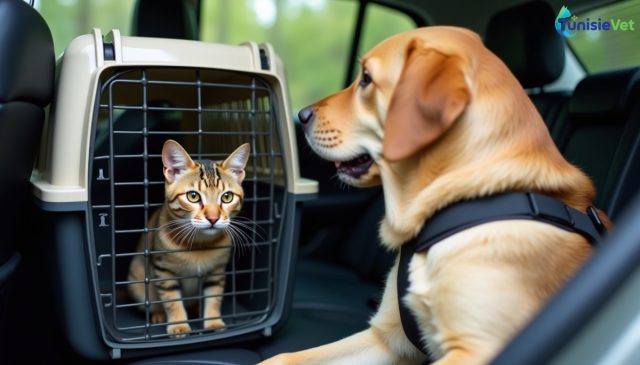
To transport an animal without stress or danger, you need the right carrier, some preparation beforehand, and regular breaks. Whether you have a cat, a dog, a rabbit or a few hens, the same principles apply. This practical guide gathers simple veterinary advice: choosing the right equipment, getting your animal used to travelling, travelling safely and knowing when to see a vet.
The TunisieVet app to care for your pet
Vets, adoption and products



1. Why Transporting an Animal Properly Matters
A journey is often a source of fear: unfamiliar noises, movement and smells. In animals, stress can cause vomiting, rapid breathing, trembling or loss of control. Poor transport also exposes animals to injuries, excessive heat and, in a car, real dangers for every passenger.
A well-prepared animal copes better with the trip. It recovers more quickly and keeps its trust in its owner.
2. Choosing the Right Carrier for Each Species
The carrier must be sturdy, well ventilated, stable and large enough for the animal to stand up and turn around. It should not be too large either: in case of braking, the animal must not be thrown around.
| Animal | Recommended carrier | To avoid |
|---|---|---|
| Cat | Rigid basket with a top opening | Closed soft bag, arms |
| Dog | Suitable crate or harness attached to the seat belt | Lead held in hand in the car |
| Rabbit, guinea pig, hamster | Small ventilated box lined with hay or bedding | Open cage, direct sunlight |
| Hens, poultry | Crate or ventilated cage, not overloaded | Bags, overcrowding |
| Caged birds | Small cage covered with a light cloth | Draughts |
Equipment for Large Animals
For sheep, goats or cattle, the vehicle should have a non-slip floor, solid sides and good ventilation. Avoid mixing animals that do not know each other, and separate males from females.
3. Preparing the Animal Before Departure
- Get it used to the carrier: leave the crate open at home for a few days, with a treat or a familiar blanket inside.
- Take short trial trips so it associates the car with something other than an unpleasant visit.
- Keep the meal light: offer a small meal a few hours before leaving to limit nausea.
- Let it relieve itself just before getting in.
- Check its identification: collar, microchip or tag, with your up-to-date contact details.
4. Good Habits During the Journey
- Secure the carrier so it does not move, on the floor or on the seat, never loose in an open boot.
- Drive smoothly: sudden braking and sharp turns make motion sickness worse.
- Provide gentle ventilation, without a direct draught on the animal.
- Plan breaks on long journeys, offering fresh water regularly.
- Speak calmly: your voice reassures.
The Danger of Heat
Never leave an animal in a parked vehicle, even with the windows slightly open. The cabin heats up very quickly in the sun, especially in summer, and heatstroke can be fatal. Travel during cooler hours and park in the shade.
5. Common Mistakes to Avoid
- Holding a cat or small dog in your arms while driving.
- Bringing the carrier out on the day of departure with no prior habituation.
- Giving a large meal just before leaving.
- Letting a dog stick its head out of the window: risk of debris and eye injuries.
- Giving a sedative without veterinary advice: some products are dangerous depending on the species.
- Cramming poultry or small livestock to fit more on one trip.
6. When to Ask a Veterinarian for Advice
Consult before departure if the animal is very anxious, ill, elderly, pregnant, very young or prone to motion sickness. The professional can recommend a suitable treatment and check that the animal is fit to travel. For a long journey or travel abroad, also find out about the paperwork and vaccines required. You can find a practitioner through the TunisieVet veterinarian directory.
After arrival, let the animal explore calmly, offer water and food, and monitor its behaviour. Prolonged lethargy, repeated vomiting or refusal to drink warrant a call to the vet.
In Summary
- Choose a sturdy, well-ventilated carrier suited to the species.
- Get the animal used to the carrier and short trips well before departure.
- Secure the crate, drive smoothly and take breaks with water.
- Never leave an animal alone in a hot vehicle.
- Seek veterinary advice for fragile or anxious animals.
Frequently Asked Questions
Can I give an animal a sedative before a trip?
Only on a veterinarian's advice. Human medicines can be toxic to animals, and the dose depends on the species and its health.
Should I feed my animal before transporting it?
A light meal a few hours before departure is better than a large one. It limits nausea without leaving the animal hungry. Water should remain available during breaks.
How do I transport a cat that hates its carrier?
Leave the carrier open at home, lined with a familiar blanket, and reward your cat when it goes inside. A top-opening basket also makes it easier to settle the cat without a struggle.
In short, transporting an animal well relies on planning and gentleness. For advice suited to your companion animal or your herd, don't hesitate to speak with your veterinarian.
Leave a comment
Be the first to comment on this article.
