
Presentation
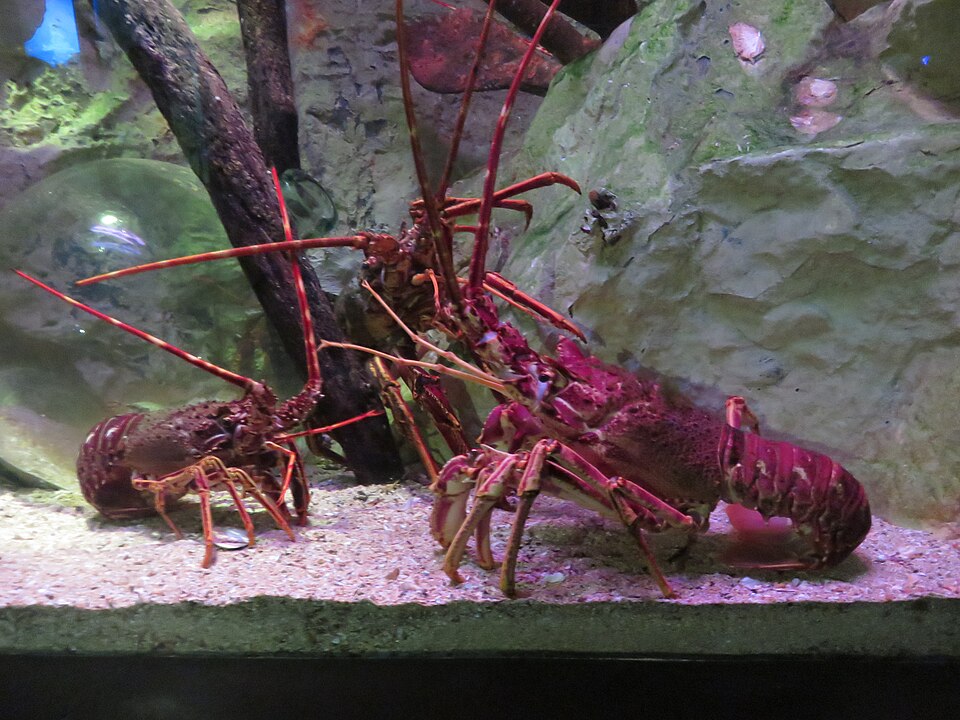
The spiny lobster is a marine crustacean with ten legs, recognizable by its spiny shell and long antennae. Unlike the common lobster, it lacks large claws. It lives on rocky bottoms, where it finds cracks and caves that provide shelter during the day. Its reddish-brown to orange body is covered with small protective spines, and it can reach 40 to 50 centimeters in length. A nocturnal species, it emerges mainly at night to forage. It is highly valued for its fine flesh, making it an important fishery resource in the Mediterranean and Atlantic. Its slow growth and late maturity make it vulnerable to overfishing.
The spiny lobster's body is segmented and protected by a rigid, spiny shell. It has two long, sturdy antennae that it uses for defense and to explore its surroundings, as well as five pairs of legs, none of which bear developed claws. Its color ranges from reddish-brown to orange, sometimes with lighter mottled markings.
Characteristics
Indicative values: they vary by subspecies, sex and region.
Habitat and distribution
The spiny lobster favors rocky bottoms and coastal reefs, generally between a few meters and around one hundred meters deep. It seeks areas with numerous cavities and crevices for shelter during the day. Juveniles sometimes inhabit shallower, more coastal habitats.
CURRENT RANGE
The species is found in the Mediterranean and in the northeastern Atlantic, from the British coasts to Morocco. It is particularly abundant along the Tunisian coast, where it is the subject of traditional fishing. Other closely related lobster species occupy tropical and subtropical zones throughout the world.
Behaviour
A solitary and rather sedentary animal, the spiny lobster shelters during the day in rocky crevices or underwater caves. It may, however, undertake seasonal migrations in groups toward deeper waters as winter approaches. When faced with a predator, it uses its antennae to deter the attack and can move backward rapidly by expelling water from its abdomen.
Reproduction
Breeding typically occurs in late summer or autumn, following mating during which the male deposits a spermatophore on the female. She then carries her fertilized eggs beneath her abdomen for several months before they hatch. The larvae, called phyllosomes, are planktonic and drift at length in the ocean before metamorphosing and settling on the sea floor.
Peculiarities
Unlike the lobster, the spiny lobster lacks large claws but defends itself using its spiny antennae. It is capable of producing a stridulation sound by rubbing the base of its antennae against its shell, an unusual defense mechanism among crustaceans.
Threats and conservation
Overfishing is the primary threat to spiny lobster populations, owing to their slow growth and high commercial value. Degradation of coastal rocky habitats and poaching further worsen the situation in certain areas. Fishery management measures, such as minimum capture sizes, are in place in several countries.
Numbers and trends vary across sources and regions. See the IUCN assessment for the latest reference data.
Gallery
1 documented photographs.
References
Profile updated 13 September 2026 · Reviewed by the TunisieVet editorial team.
Comments (0)
No comments yet.
CONSERVATION STATUS
Vulnerable (VU)
IUCN source, latest published assessment.
Species health
Documented diseases for this species.
This information is provided for educational purposes only and is not a substitute for a veterinary consultation. If you have any concerns about your animal's health, consult a veterinarian.
Similar animals
Other species documented in Animalpedia.
