
Presentation
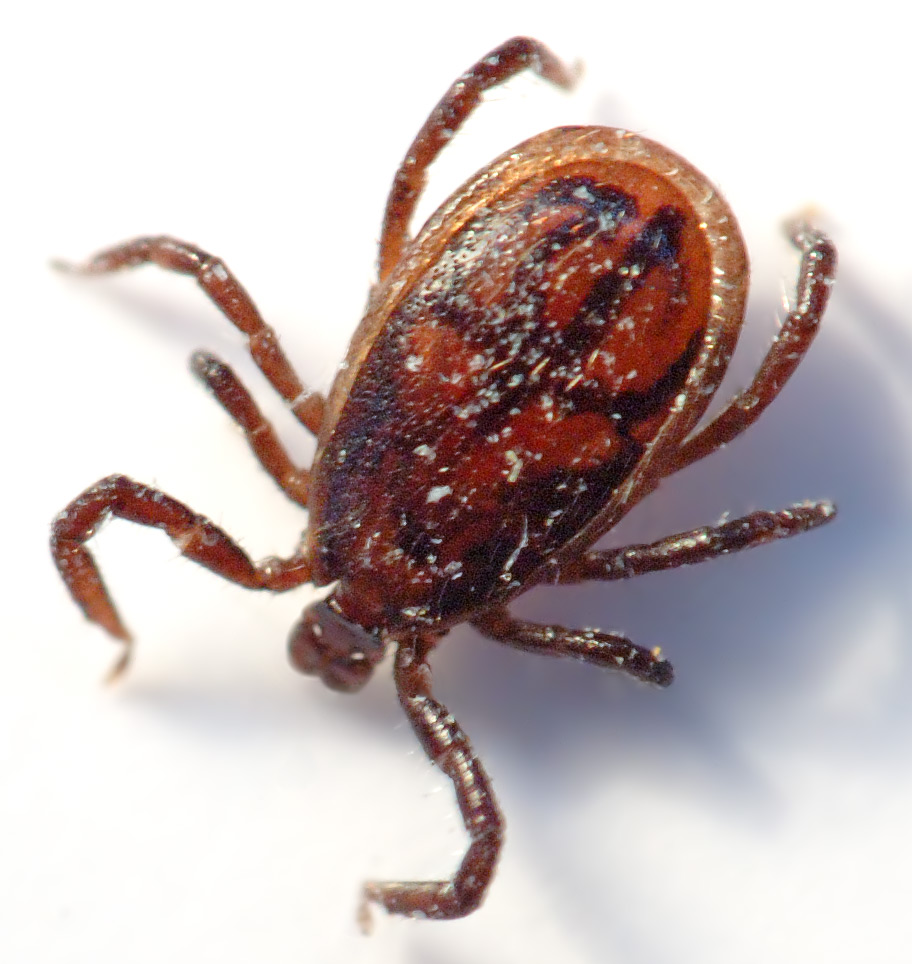
A tick is a blood-feeding mite belonging to the order Ixodida, which comprises several hundred species found worldwide. It attaches to the skin of mammals, birds, or reptiles to feed on blood, a necessary step at each stage of its development. Its oval, flattened body, without visible segmentation, becomes engorged with blood to many times its original volume. Found in gardens, forests, meadows, and pastures, the tick is a major disease vector for both humans and animals, including Lyme disease. In Tunisia, several tick species are commonly found on livestock, dogs, and sometimes humans. Its small size and inconspicuous nature often lead to late detection, usually after feeding.
When adult, a tick measures between 2 and 5 mm when unfed, but can reach 1 to 2 cm once engorged with blood. Its body is divided into two parts: the idiosoma (body) and the capitulum (mouthparts), with no visible distinction between head, thorax, and abdomen. It has eight legs at the adult and nymphal stages, compared to six at the larval stage. Its resistant cuticle allows it to survive varying climate conditions and long periods without feeding.
Characteristics
Indicative values: they vary by subspecies, sex and region.
Habitat and distribution
Ticks are found in tall grass, scrubland, woodland edges, and pastures where their hosts regularly move through. Some species are restricted to damp habitats, while others tolerate drier environments such as Mediterranean shrubland. Livestock farms and rural areas are major foci because of the continuous presence of cattle.
CURRENT RANGE
Ticks are present on all continents except Antarctica, in temperate, tropical, and Mediterranean climates. In North Africa, several genera such as Rhipicephalus and Hyalomma are widely distributed. Tunisia harbors various species adapted to rural areas and livestock farms.
Behaviour
The tick employs a waiting strategy called "questing," in which it climbs onto low vegetation and waits for a host to pass by, with its front legs held outstretched. It does not jump or fly, but attaches to fur or clothing through direct contact. Once fixed in place, it inserts its mouthparts into the skin and can remain attached for several days without being noticed. Between blood meals, it may remain inactive for long periods, particularly during winter.
Reproduction
Mating typically occurs on the host or nearby, after the female takes a blood meal. She then lays several thousand eggs on the ground in a single batch before dying. The life cycle has four stages: egg, larva, nymph, and adult, each requiring a blood meal to advance to the next stage, except the egg.
Peculiarities
A tick can transmit multiple pathogens simultaneously during a single bite, complicating the diagnosis of vector-borne diseases. Some species can survive more than a year without feeding, in a state of reduced activity. The mouthparts may sometimes remain embedded in the skin even after the body is removed, causing a localized inflammatory reaction.
Threats and conservation
The tick itself is not threatened; it is instead considered a pest and a concerning health vector. Acaricide treatments used in livestock farming and veterinary medicine aim to control its populations. Climate change is promoting the expansion of its range into areas previously too cold.
Numbers and trends vary across sources and regions. See the IUCN assessment for the latest reference data.
Gallery
1 documented photographs.
References
Profile updated 28 August 2026 · Reviewed by the TunisieVet editorial team.
Comments (0)
No comments yet.
CONSERVATION STATUS
Least concern (LC)
IUCN source, latest published assessment.
Species health
Documented diseases for this species.
See the 4 diseases of this species Find a veterinarianThis information is provided for educational purposes only and is not a substitute for a veterinary consultation. If you have any concerns about your animal's health, consult a veterinarian.
To discover around: Tick
Videos, facts, stories and records linked to this species.
Similar animals
Other species documented in Animalpedia.

📱 عندك صفحة على فايسبوك؟ باهي… أما وين موقعك؟ الصفحة وحدها ما تكفيش. موقعك يخلي الناس تلقاك، يعرفوك أكثر ويثقو في خدمتك. 🌐 موقع باسم مشروعك 📲 يخدم أربعة وعشرين ساعة 🤝 يعطي ثقة واحترافية .📈 يعاونك تكبّر خدمتك خلّيه موجود وين الناس تلوّج عليه 🚀نعملولك موقع يشرّف مشروعك
WhatsApp