
Presentation
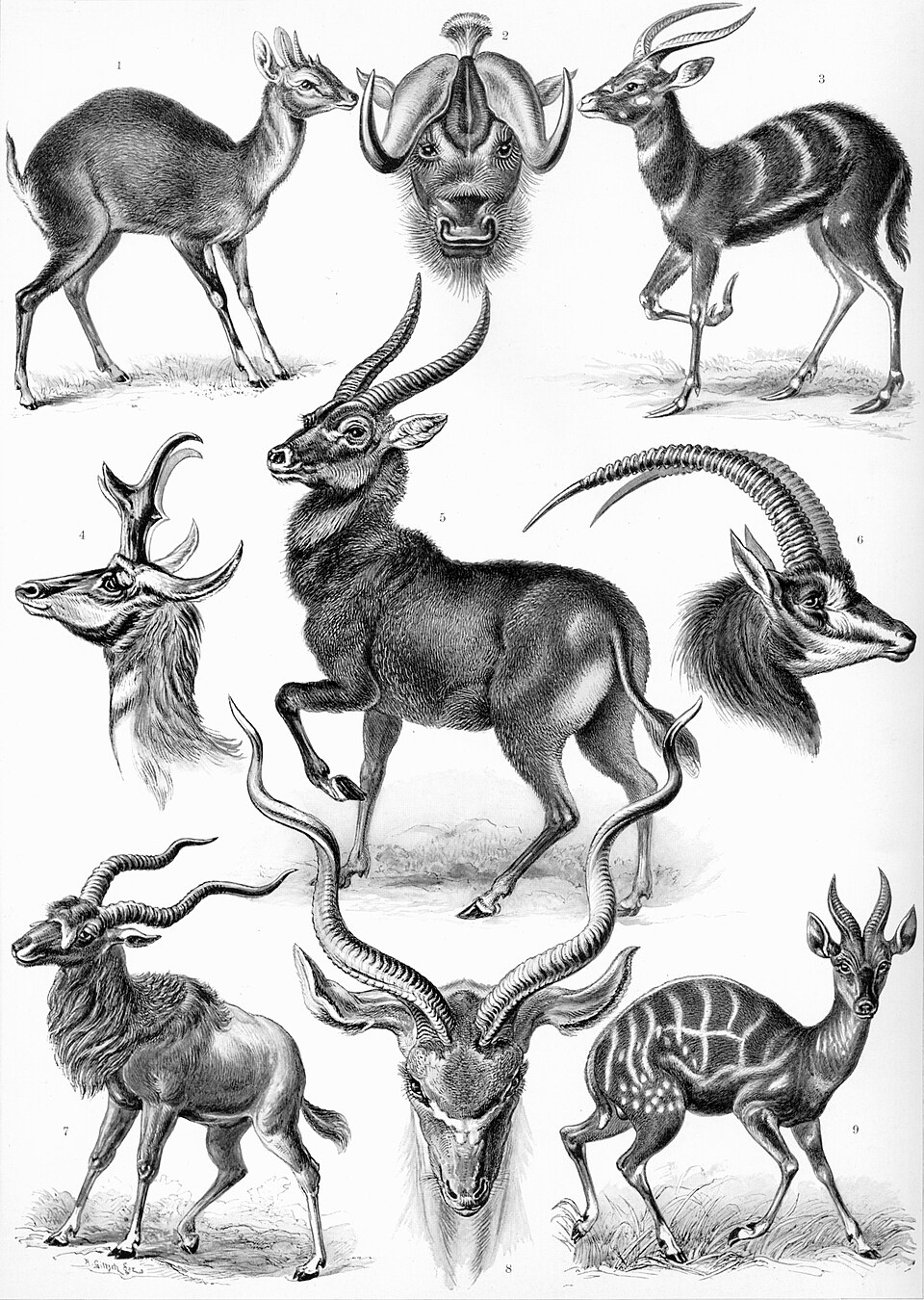
The Antelope designates a group of ruminant mammals belonging to the family Bovidae, bringing together numerous African and Asian species such as the wildebeest, the impala or the gazelle. These animals are characterized by thin, elongated limbs adapted for rapid running, as well as horns present in most species. They occupy open environments such as savannahs, steppes and deserts, where speed constitutes their main defense against predators. The diversity of the group is very wide, ranging from small inconspicuous species to large gregarious herbivores forming large herds. In Tunisia and North Africa, certain closely related species such as the Dorcas gazelle are sometimes included under this generic term. The term “Antelope” is not a strict taxonomic category but a vernacular name grouping several genera.
Antelopes have slender bodies, long, slender legs, and musculature suited to endurance and speed running. Most species have unbranched, permanent horns, present in both sexes or only in males depending on the species. Their coat ranges from light tan to reddish brown, often with contrasting facial markings to aid intraspecific recognition.
Characteristics
Indicative values: they vary by subspecies, sex and region.
Habitat and distribution
Antelopes occupy a wide variety of open environments, from grassy savannahs to arid steppes, including some deserts for the most drought-resistant species. Some species also frequent wooded areas or the edges of wetlands to drink. This diversity of habitats explains the wide geographical distribution of the group.
CURRENT RANGE
The majority of Antelopes species live in sub-Saharan Africa, with some representatives in Asia and North Africa. The term includes species present from the Maghreb to southern Africa, as well as certain Asian Antelopes such as the nilgaut. The precise distribution strongly depends on the species considered within this heterogeneous group.
Behaviour
The majority of species live in herds, the size of which varies from a few individuals to several thousand during major migrations. They are generally diurnal, with peaks of activity at dawn and dusk to avoid the heat. Collective vigilance and running speed constitute their main strategies against predators such as wild felines and canids.
Reproduction
Reproduction often follows a seasonal cycle linked to the availability of food resources. Gestation generally lasts between five and nine months depending on the species, most often resulting in the birth of a single young. Young are able to move quickly after birth, an adaptation essential for escaping predators.
Peculiarities
The term “Antelope” brings together very different species taxonomically, without constituting a single scientifically recognized taxon. Some species can reach high top speeds over short distances to escape predators. The morphological diversity of the group, from spiral horns to very varied coats, makes it a striking example of evolutionary adaptation to open environments.
Threats and conservation
Major threats include habitat loss from agricultural expansion and urbanization, as well as poaching for meat and trophies in some areas. Competition with domestic livestock for water and pasture resources also affects several populations. Conservation status varies greatly depending on the species, with some being common while others are threatened with extinction.
Numbers and trends vary across sources and regions. See the IUCN assessment for the latest reference data.
Gallery
1 documented photographs.
References
Profile updated 20 August 2026 · Reviewed by the TunisieVet editorial team.
Comments (0)
No comments yet.
CONSERVATION STATUS
Least concern (LC)
IUCN source, latest published assessment.
Species health
Documented diseases for this species.
See the 8 diseases of this species Find a veterinarianThis information is provided for educational purposes only and is not a substitute for a veterinary consultation. If you have any concerns about your animal's health, consult a veterinarian.
Related species
To discover around: Antelope
Videos, facts, stories and records linked to this species.
Similar animals
Other species documented in Animalpedia.

TunisieVet in your pocket 📱🐾 Access your veterinary services wherever you are. [ Download the app ]
Learn more