
Presentation
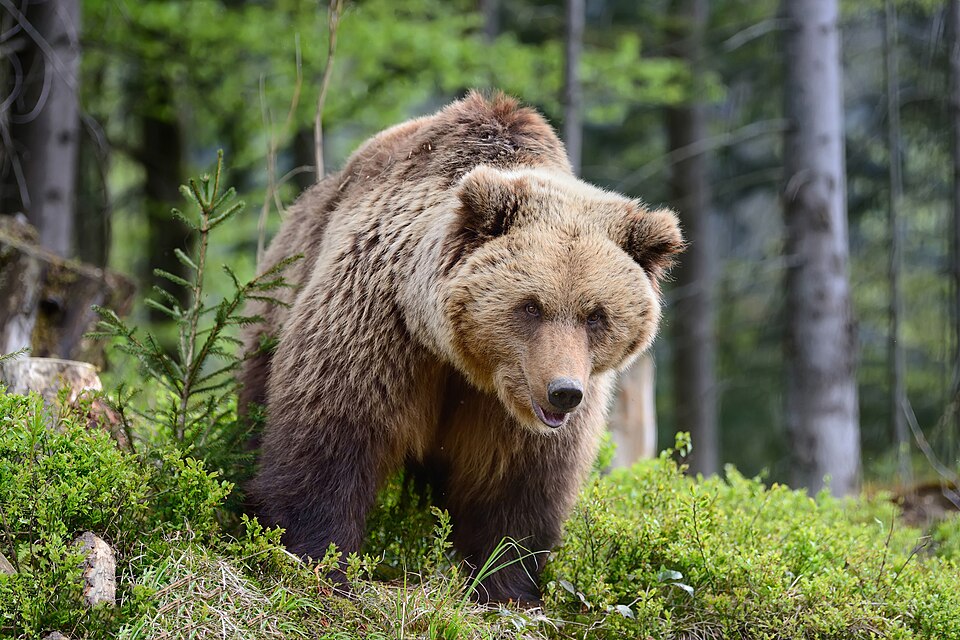
Brown bear is a large, massive carnivore, emblematic of the boreal and temperate regions of the northern hemisphere. Covered in thick, dense fur, generally of varying brown hue, it is one of the largest terrestrial predators today. It is a solitary, powerful and intelligent animal, capable of adapting to very diverse environments.
The Brown bear has a sturdy, stocky body, with short, powerful legs equipped with five non-retractable claws. Its head is large with a prominent snout, and its ears are small and rounded. The coat varies from light blond to dark brown, sometimes with golden highlights, and thickens considerably before winter.
Did you know?
Which animal has the best sense of smell in the world?
Characteristics
Indicative values: they vary by subspecies, sex and region.
Habitat and distribution
Brown bear frequents dense forests, taigas and mountainous areas, from low altitudes to subarctic regions. It prefers environments with significant forest cover and access to water. It can also colonize tundras and coastal regions depending on its subspecies and food availability.
CURRENT RANGE
Brown bear is found in northern Europe (Scandinavia, Russia), northern and central Asia, the Caucasus region, and North America (Canada, Alaska, Rocky Mountains). Its distribution area has been reduced historically but stable populations persist in several protected areas.
Behaviour
The Brown bear is mainly solitary, except during the breeding season. It is crepuscular and nocturnal, active especially at dawn and dusk. An excellent swimmer and climber despite his build, he establishes a territory that he regularly marks. In winter, it goes into deep hibernation, drastically reducing its metabolism.
Reproduction
The mating period extends from April to June. Females give birth to 1 to 4 cubs after a gestation of about 6 to 8 months, usually during winter hibernation. The young stay with their mothers for 2 to 3 years and learn essential survival skills.
Peculiarities
The Brown bear has an exceptionally keen sense of smell, rivaling that of hunting dogs. It can detect a carcass from several kilometers away. Each individual has unique fingerprints. He is known for his intelligence, exceptional memory and problem-solving ability.
Threats and conservation
Although the conservation status is favorable, the Brown bear faces local threats: fragmentation of its habitat by human activities, conflicts with livestock farms, and unregulated hunting in certain regions. Climate change also affects the seasonal availability of its food resources.
Numbers and trends vary across sources and regions. See the IUCN assessment for the latest reference data.
Gallery
1 documented photographs.
References
UICN — Liste rouge des espèces menacées
Profile updated 30 August 2026 · Reviewed by the TunisieVet editorial team.
Comments (0)
No comments yet.
CONSERVATION STATUS
Least concern (LC)
IUCN source, latest published assessment.
Species health
Documented diseases for this species.
This information is provided for educational purposes only and is not a substitute for a veterinary consultation. If you have any concerns about your animal's health, consult a veterinarian.
To discover around: Brown bear
Videos, facts, stories and records linked to this species.
Similar animals
Other species documented in Animalpedia.

TunisieVet in your pocket 📱🐾 Access your veterinary services wherever you are. [ Download the app ]
Learn more