
Presentation
The Cockatiel is a small Australian parrot characterized by its distinctive crest and gray and white hues. With her affectionate temperament and remarkable intelligence, she has become one of the most popular pet birds in the world.
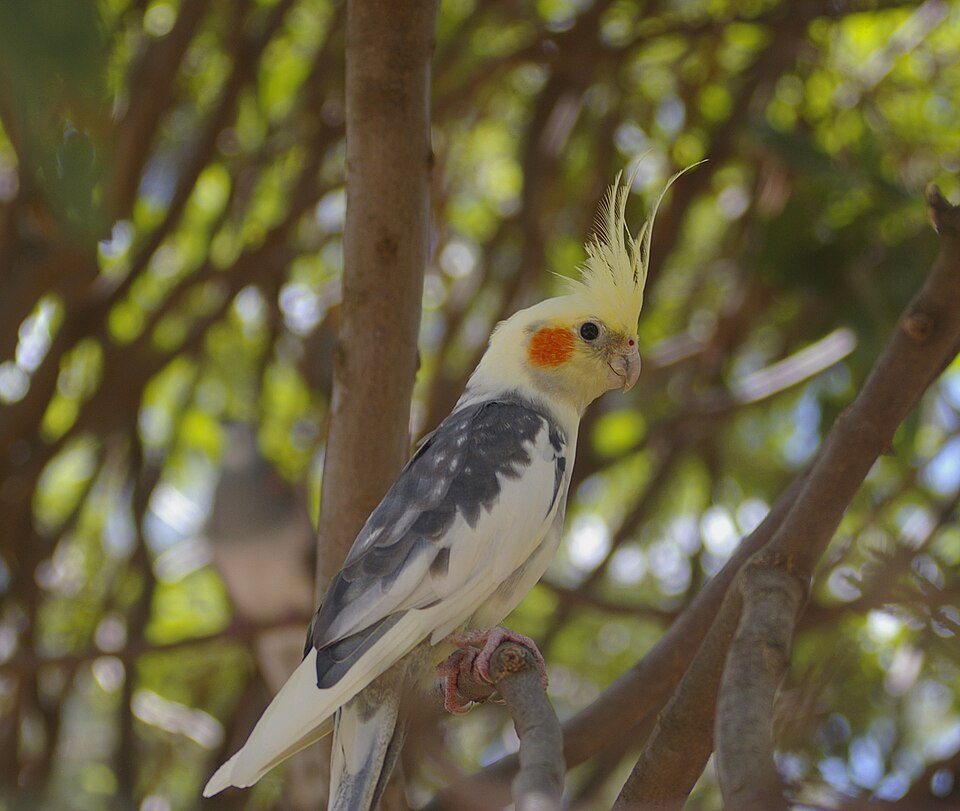
The species has pearl gray plumage with white wing markings and a distinctive orange cheek patch. The pointed crest on the head rises when the bird is excited or alarmed. Sexual dimorphism is notable: males generally display a yellow tint on their heads, while females remain more discreet.
Characteristics
Indicative values: they vary by subspecies, sex and region.
Habitat and distribution
Cockatiel naturally inhabits steppe and semi-arid areas of Australia, grasslands, savannah woodlands and shrublands. It is found in open areas with scattered trees and bushes.
CURRENT RANGE
Endemic to Australia, Cockatiel is widely distributed across the continent, from the east coast to arid inland regions. Its natural range extends from the coastline to the inland desert.
Behaviour
This bird is very social and affectionate, naturally living in small groups. In captivity, it develops strong bonds with its owners and enjoys daily interaction. The Cockatiel is known for its talent for whistling and playing melodies, as well as its natural vocal performance.
Reproduction
Cockatiels breed in tree cavities in the wild. In captivity, they happily nest in suitable nest boxes. The female usually lays 4 to 6 white eggs, incubated for approximately 18 to 21 days. The chicks fledge after 4 to 5 weeks.
Peculiarities
The Cockatiel has a movable crest that it can erect at will, serving as an emotional indicator. It is capable of producing a variety of distinctive sounds, from melodious whistles to alarm cries. His intelligence allows him to learn tricks and recognize familiar melodies.
Threats and conservation
Due to its Least Concern status, Cockatiel does not face major threats in the wild. Capture for the pet trade has little impact on Australian wild populations.
Numbers and trends vary across sources and regions. See the IUCN assessment for the latest reference data.
Gallery
1 documented photographs.
References
UICN — Liste rouge des espèces menacées
Profile updated 17 August 2026 · Reviewed by the TunisieVet editorial team.
Comments (0)
No comments yet.
CONSERVATION STATUS
Least concern (LC)
IUCN source, latest published assessment.
Species health
Documented diseases for this species.
See the 8 diseases of this species Find a veterinarianThis information is provided for educational purposes only and is not a substitute for a veterinary consultation. If you have any concerns about your animal's health, consult a veterinarian.
Similar animals
Other species documented in Animalpedia.

TunisieVet in your pocket 📱🐾 Access your veterinary services wherever you are. [ Download the app ]
Learn more