Presentation
The queen conch is a large marine gastropod easily recognized by its massive spiral shell, which features a flared outer lip that is pink on the inside. It lives on sandy bottoms and seagrass beds in shallow tropical waters. This animal moves slowly using a muscular foot and a horny, claw-shaped operculum. Its flesh is traditionally eaten in the Caribbean, and its shell is used as decoration, a tool, or a wind instrument. The species plays an important ecological role by grazing on algae in seagrass beds. Today it faces threats from overfishing driven by commercial demand.
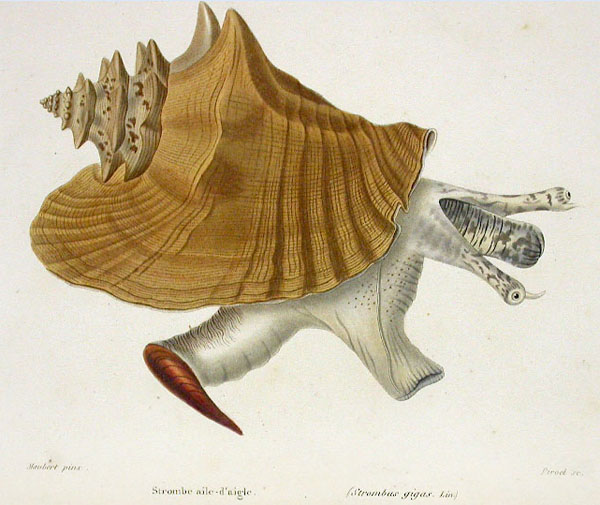
The shell can exceed 30 cm in length and displays a conical spiral topped by a broad flared lip. The external color ranges from beige to rosy brown, while the interior is nacre-coated and pink to orange. The foot bears a sharp horny operculum used to propel itself in short hops. The eyes, mounted on long stalks, are particularly well developed for a mollusk.
Characteristics
Indicative values: they vary by subspecies, sex and region.
Habitat and distribution
The conch favors sandy seabeds and seagrass meadows in shallow coastal zones, typically between 1 and 20 meters deep. It needs clear, warm waters to thrive. The seagrass meadows provide both food and shelter from predators.
CURRENT RANGE
The species originates from the tropical and subtropical seas of the western Atlantic, particularly the Caribbean, the Gulf of Mexico, and the coasts of Florida. It is absent from the Mediterranean and therefore from Tunisia. Its natural range remains limited to this region despite its worldwide commercial importance.
Behaviour
Rather sedentary, the queen conch moves little and only in jerky motions thanks to its operculum. It partially buries itself in the sand during the day to protect itself from predators. Young individuals often live in groups, while adults tend to become more solitary.
Reproduction
Reproduction occurs through internal fertilization, with the male transferring sperm to the female using a specialized copulatory organ. The female lays long gelatinous strings containing hundreds of thousands of eggs, deposited in the sand. The planktonic larvae drift for several weeks before settling and developing their permanent shell.
Peculiarities
The conch shell produces a low-pitched sound when air is blown through it, a traditional use as a musical instrument or signal. It is also sought for its pink pearls, which are rare and natural, highly prized in jewelry.
Threats and conservation
Overfishing for food consumption and shell trade represents the primary threat to the species. Degradation of seagrass meadows due to pollution and coastal development also reduces its natural habitat. The species is listed in Appendix II of CITES to regulate its international trade.
Numbers and trends vary across sources and regions. See the IUCN assessment for the latest reference data.
Gallery
1 documented photographs.
References
Profile updated 31 August 2026 · Reviewed by the TunisieVet editorial team.
Comments (0)
No comments yet.
CONSERVATION STATUS
Vulnerable (VU)
IUCN source, latest published assessment.
Species health
Documented diseases for this species.
This information is provided for educational purposes only and is not a substitute for a veterinary consultation. If you have any concerns about your animal's health, consult a veterinarian.
Similar animals
Other species documented in Animalpedia.

Be among the first to use our app. Sign up and get early Google Play access.
Discover