
Presentation
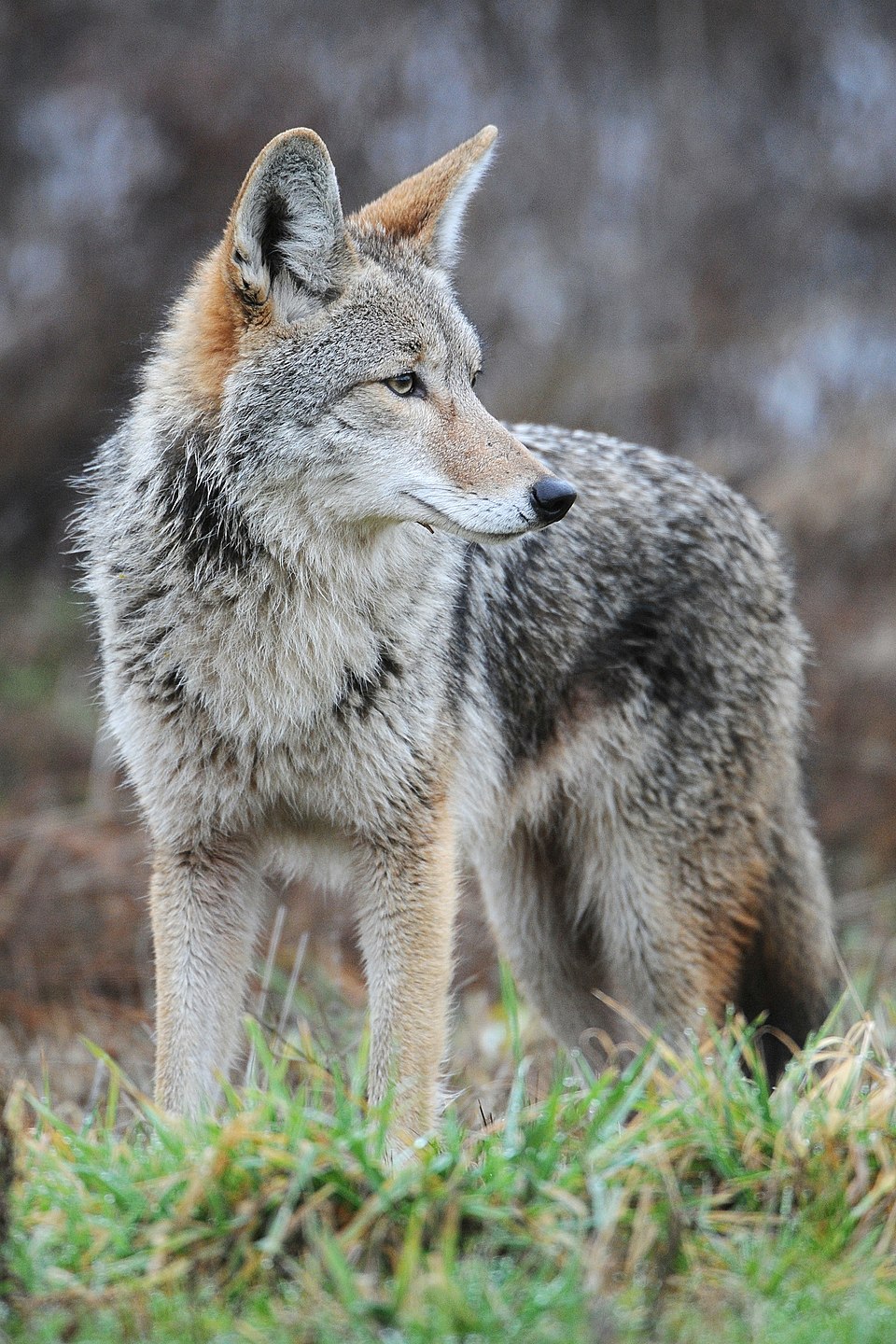
The Coyote is a medium-sized canid native to North and Central America, often compared to a small wolf with a slender snout. Its grayish to tawny coat, slender silhouette, and large erect ears distinguish it from other wild canids. An opportunistic and adaptable species, it has considerably extended its range since the 20th century, colonizing even the outskirts of large cities. Very vocal, it is renowned for its nocturnal howls and yips which serve to mark territory and maintain social cohesion. It plays an important role in regulating populations of small mammals in the ecosystems it occupies. Its popular reputation, particularly in North American folklore, makes it an emblematic figure of the continent's wildlife.
The Coyote measures between 75 and 100 cm long, excluding tail, with a height at the withers of approximately 50 to 60 cm. It has a dense coat of gray, brown or fawn color depending on the region, with a bushy tail with a black tip. Its fine limbs and keen hearing make it an agile and discreet hunter.
Characteristics
Indicative values: they vary by subspecies, sex and region.
Habitat and distribution
The Coyote frequents a wide diversity of environments, from meadows and steppes to forests and deserts. It has also adapted very well to agricultural and peri-urban areas, where it finds food and shelter. This ecological plasticity makes it one of the most widespread canids on the American continent.
CURRENT RANGE
The species is native to North and Central America, from Canada to Panama. Its range expanded significantly during the 20th century, notably due to the disappearance of wolves, its main competitors. It is found today both in the Great Plains and in certain North American metropolises.
Behaviour
The Coyote is a primarily crepuscular and nocturnal animal, although it may be active during the day in areas with little disturbance. It lives alone, in pairs or in small family groups depending on the availability of resources and hunting pressure. An excellent runner, it can reach high speeds over short distances to capture prey or flee danger. Its complex vocal communication, combining howls and barks, allows group members to coordinate over long distances.
Reproduction
The mating season takes place in winter, between January and March depending on the region. After a gestation of approximately 60 to 65 days, the female gives birth in a burrow of 4 to 7 young on average. The young are weaned around two months and often stay with their parents until the following fall to learn hunting techniques.
Peculiarities
Coyote can hybridize with gray wolves and domestic dogs, giving rise to individuals called coywolves in parts of North America. It is capable of leaping several meters to capture its prey. Its exceptional capacity for adaptation allows it to survive in environments heavily disturbed by humans.
Threats and conservation
The species is not threatened on a global scale and its populations are generally stable or even expanding. However, it is the subject of regulatory campaigns in certain agricultural regions due to conflicts with livestock farming. Hunting and trapping remain the leading causes of human-caused mortality.
Numbers and trends vary across sources and regions. See the IUCN assessment for the latest reference data.
Gallery
1 documented photographs.
References
Profile updated 24 August 2026 · Reviewed by the TunisieVet editorial team.
Comments (0)
No comments yet.
CONSERVATION STATUS
Least concern (LC)
IUCN source, latest published assessment.
Species health
Documented diseases for this species.
See the 8 diseases of this species Find a veterinarianThis information is provided for educational purposes only and is not a substitute for a veterinary consultation. If you have any concerns about your animal's health, consult a veterinarian.
Related species
To discover around: Coyote
Videos, facts, stories and records linked to this species.
Similar animals
Other species documented in Animalpedia.

TunisieVet in your pocket 📱🐾 Access your veterinary services wherever you are. [ Download the app ]
Learn more