
Presentation
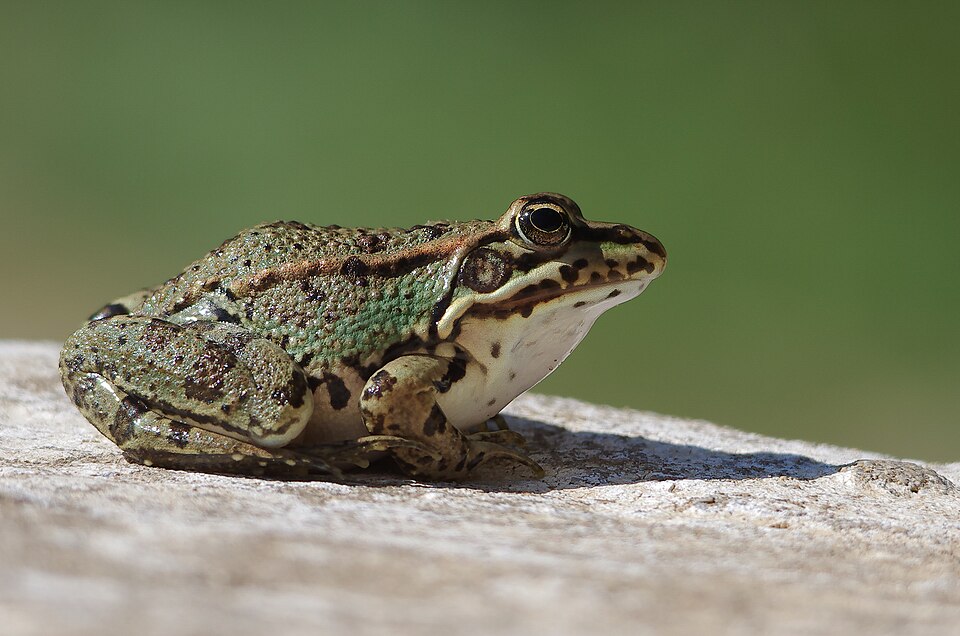
Sahara frog is a medium-sized anuran belonging to the Ranidae family. Characterized by its smooth, shiny green to green-brown skin, this species is well adapted to the aquatic environments of North Africa.
This frog is distinguished by its smooth, shiny green skin, sometimes with darker spots or mottling. The hind legs are robust and have developed swimming membranes. Protruding eyes and visible eardrums are major defining features.
Did you know?
Why are some frogs poisonous?
Characteristics
Indicative values: they vary by subspecies, sex and region.
Habitat and distribution
This frog colonizes rivers, lakes, ponds and permanent or semi-permanent wetlands. It particularly likes well-oxygenated fresh water, often bordered by dense aquatic vegetation which provides it with refuge and hunting grounds. It avoids polluted stagnant water.
CURRENT RANGE
An endemic species from North Africa, its distribution extends mainly to Morocco and Algeria, with a confirmed presence in Tunisia where it represents the only indigenous green frog. Its distribution area remains fragmented and linked to available aquatic environments.
Behaviour
A very aquatic amphibious species, it spends most of its time in fresh water where it swims with agility. It is particularly active during hot and humid periods. These frogs are often gregarious and gather in large numbers in suitable areas, especially during reproduction.
Reproduction
Reproduction generally takes place in spring and summer, when water conditions are favorable. Males emit characteristic mating songs to attract females. After amplexus, the female lays numerous eggs in clusters which hatch into aquatic tadpoles, which undergo gradual metamorphosis.
Peculiarities
Remarkable ability to jump short distances and swim powerfully thanks to its webbed feet. It has skin that is sufficiently moist to partially breathe transcutaneously. Its mating song is a powerful croaking sound that can be heard several hundred meters away, especially during nighttime choirs.
Threats and conservation
Although classified as Least Concern, the species faces progressive degradation of its habitats due to drought, reduction of water sources and development of wetlands. Water pollution and the introduction of competing or predatory species constitute additional threats to monitor.
Numbers and trends vary across sources and regions. See the IUCN assessment for the latest reference data.
Gallery
1 documented photographs.
References
UICN — Liste rouge des espèces menacées
Profile updated 28 August 2026 · Reviewed by the TunisieVet editorial team.
Comments (0)
No comments yet.
CONSERVATION STATUS
Least concern (LC)
IUCN source, latest published assessment.
Species health
Documented diseases for this species.
This information is provided for educational purposes only and is not a substitute for a veterinary consultation. If you have any concerns about your animal's health, consult a veterinarian.
To discover around: Sahara frog
Videos, facts, stories and records linked to this species.
Similar animals
Other species documented in Animalpedia.

TunisieVet in your pocket 📱🐾 Access your veterinary services wherever you are. [ Download the app ]
Learn more