
Presentation
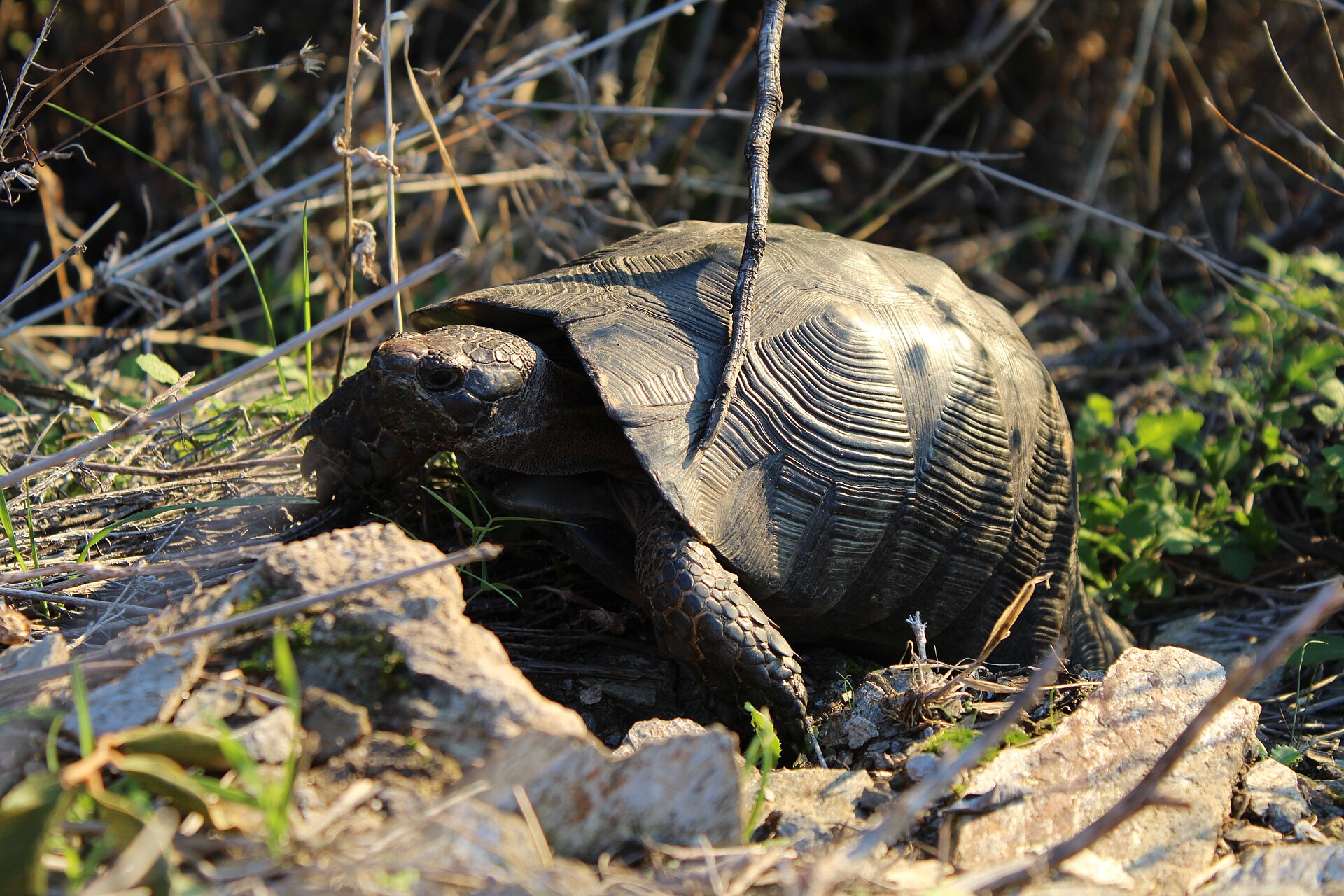
The Greek tortoise (Testudo graeca) is a medium-sized land turtle, widely distributed around the Mediterranean basin and in the Maghreb. It is recognizable by its rounded yellow to brown shell spotted with black and the horny spurs on its thighs. An emblematic species of Tunisia, it frequents dry environments, scrub and coastal areas. Long collected from the wild for the pet trade, it now benefits from protected status. Its exceptional longevity and slow pace of life make it a popular but demanding animal in captivity.
The carapace, rounded and robust, generally measures between 15 and 25 cm in length as an adult. Its coloring varies from straw yellow to olive brown, with irregular black spots on each scale. It has a distinctive horny spur on each side of the tail, a feature that differentiates it from other Testudo species. The legs are short and sturdy, suitable for walking on dry and rocky ground.
Did you know?
Which animal lives the longest?
Characteristics
Indicative values: they vary by subspecies, sex and region.
Habitat and distribution
It inhabits arid and semi-arid areas, scrubland, Mediterranean scrub and rocky terrain. It is also found in sandy coastal areas and sparsely vegetated steppes. It likes environments offering both sunny areas for thermoregulation and plant shelters to protect itself from excessive heat.
CURRENT RANGE
The species is present around the Mediterranean basin, in North Africa, the Near East and in certain regions of southern Europe. In Tunisia, it is widespread in several regions, notably the north and center of the country. Its natural range extends from Morocco to Iran via Tunisia, Libya and Turkey.
Behaviour
A diurnal and rather solitary animal, it is active mainly in the morning and late afternoon to avoid extreme heat. It estivates during the hottest periods and can hibernate in temperate climates during the winter. Its behavior is generally calm, but males can be territorial and slightly confrontational during the breeding season. It moves slowly and retracts into its shell at the slightest danger.
Reproduction
The breeding season takes place in spring, after emerging from hibernation. The female lays between 2 and 8 eggs in a nest dug in sandy or loose soil, at a sufficient depth to protect them. Incubation lasts between 2 and 3 months depending on ambient temperature. Young turtles are completely independent from birth and grow very slowly.
Peculiarities
Its horned femoral spur, unique among turtles of its kind, serves to easily identify it. It can live for several decades, with some individuals exceeding 100 years in captivity. Its growth is extremely slow, which makes estimating its age difficult without precise data on its capture.
Threats and conservation
The main threat is the destruction of its natural habitat due to urbanization and intensive agriculture. Illegal trade for the pet market has had a significant impact on wild populations in the past. Road collisions and nest predation by domestic or wild animals also constitute significant risks. In Tunisia, the species is protected by national legislation.
Numbers and trends vary across sources and regions. See the IUCN assessment for the latest reference data.
Gallery
1 documented photographs.
References
Profile updated 17 August 2026 · Reviewed by the TunisieVet editorial team.
Comments (0)
No comments yet.
CONSERVATION STATUS
Vulnerable (VU)
IUCN source, latest published assessment.
Species health
Documented diseases for this species.
This information is provided for educational purposes only and is not a substitute for a veterinary consultation. If you have any concerns about your animal's health, consult a veterinarian.
To discover around: Greek tortoise
Videos, facts, stories and records linked to this species.
Similar animals
Other species documented in Animalpedia.

TunisieVet in your pocket 📱🐾 Access your veterinary services wherever you are. [ Download the app ]
Learn more