
Presentation
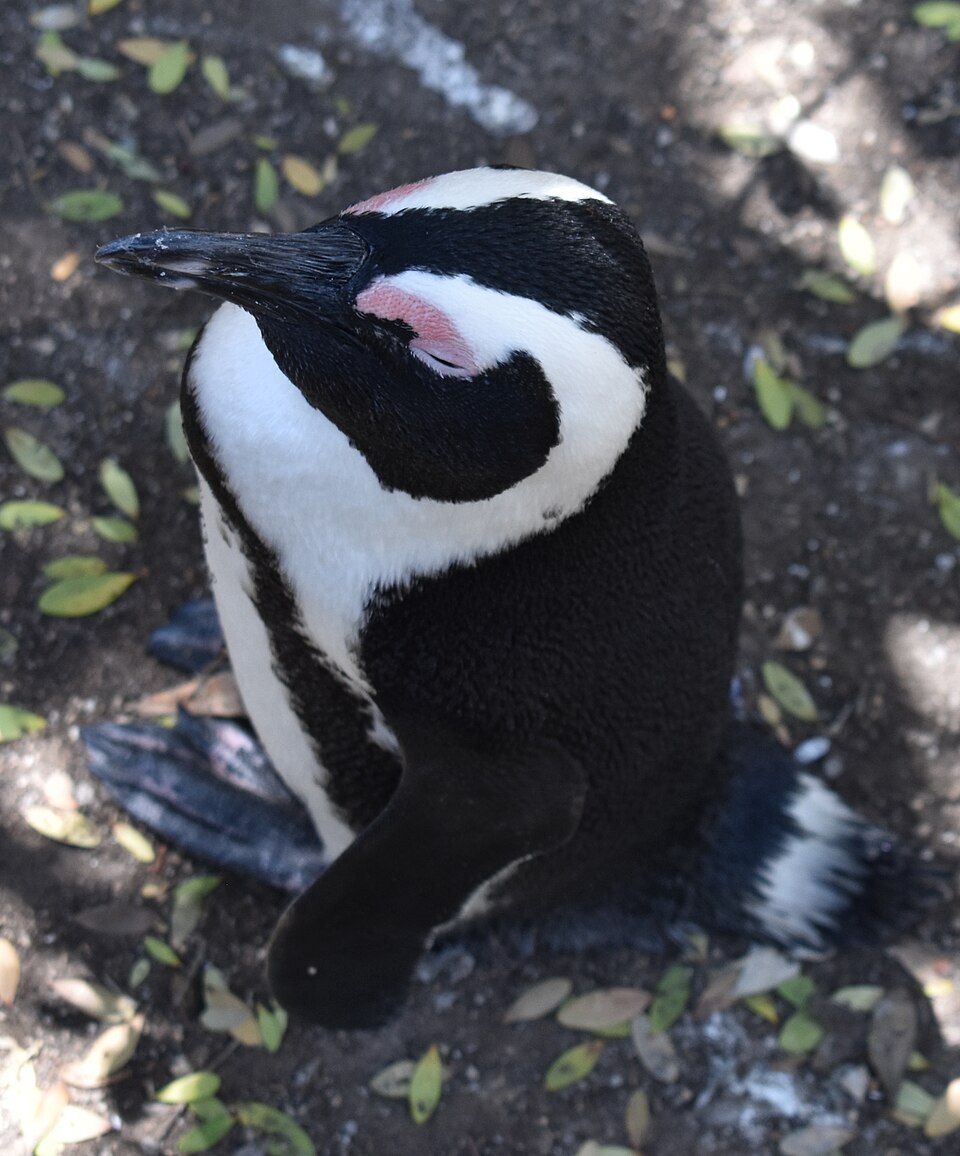
The African penguin is a flightless seabird native to the coasts of southern Africa. It can be identified by its black and white plumage and the horseshoe-shaped black band that marks its belly. Adapted to aquatic life, it uses its wings transformed into flippers to propel itself underwater in search of fish. It forms noisy colonies on islands and certain beaches along the South African and Namibian coastline. Its call resembles a donkey's bray, earning it the nickname "jackass penguin."
The African penguin stands between 60 and 70 cm tall and weighs between 2 and 4 kg depending on the season. Its black back and white belly provide effective camouflage against marine predators. A patch of pink skin above the eyes helps it regulate body temperature. Each individual has a unique pattern of black spots on its chest, similar to a fingerprint.
Characteristics
Indicative values: they vary by subspecies, sex and region.
Habitat and distribution
The species inhabits rocky coasts, islands, and certain beaches along the South African and Namibian shoreline. It requires direct access to the ocean for feeding and sheltered land areas for nesting. Colonies establish themselves in zones of low vegetation or dig burrows in sand or hardened guano. Proximity to ocean currents rich in fish is crucial for colony settlement.
CURRENT RANGE
The African penguin is endemic to the coasts of South Africa and Namibia. It is found notably on islands off the Cape and at a few protected mainland sites. Its range has contracted significantly over the past century due to the decline of fish populations and degradation of breeding sites.
Behaviour
The African penguin is a gregarious animal living in colonies that can number several thousand individuals. It digs burrows or shelters under vegetation to protect itself from heat and predators. An excellent swimmer, it can reach high speeds underwater but moves awkwardly on land. Pairs typically remain faithful across several breeding seasons.
Reproduction
The female typically lays two eggs, which she and the male incubate in turn for about 40 days. The chicks remain in the nest and are fed by regurgitation until they become independent, around 2 to 4 months of age. Sexual maturity is reached at about 4 to 5 years. Breeding occurs year-round but shows seasonal peaks depending on the colony location.
Peculiarities
This species is also called the black-footed penguin or jackass penguin, owing to its distinctive call. It has the ability to drink seawater thanks to specialized glands that filter out salt. Unlike most penguin species, it lives in a temperate to warm climate rather than a polar one.
Threats and conservation
Overfishing of sardines and anchovies greatly reduces available food resources. Pollution from petroleum products, particularly during oil spills, has caused mass mortality in the past. Destruction of breeding sites linked to historical guano harvesting and predation by introduced species compound its decline. The species is now classified as endangered.
Numbers and trends vary across sources and regions. See the IUCN assessment for the latest reference data.
Gallery
1 documented photographs.
References
Profile updated 08 September 2026 · Reviewed by the TunisieVet editorial team.
Comments (0)
No comments yet.
CONSERVATION STATUS
Endangered (EN)
IUCN source, latest published assessment.
Species health
Documented diseases for this species.
This information is provided for educational purposes only and is not a substitute for a veterinary consultation. If you have any concerns about your animal's health, consult a veterinarian.
To discover around: African Penguin
Videos, facts, stories and records linked to this species.
Similar animals
Other species documented in Animalpedia.

TunisieVet in your pocket 📱🐾 Access your veterinary services wherever you are. [ Download the app ]
Learn more