
Presentation
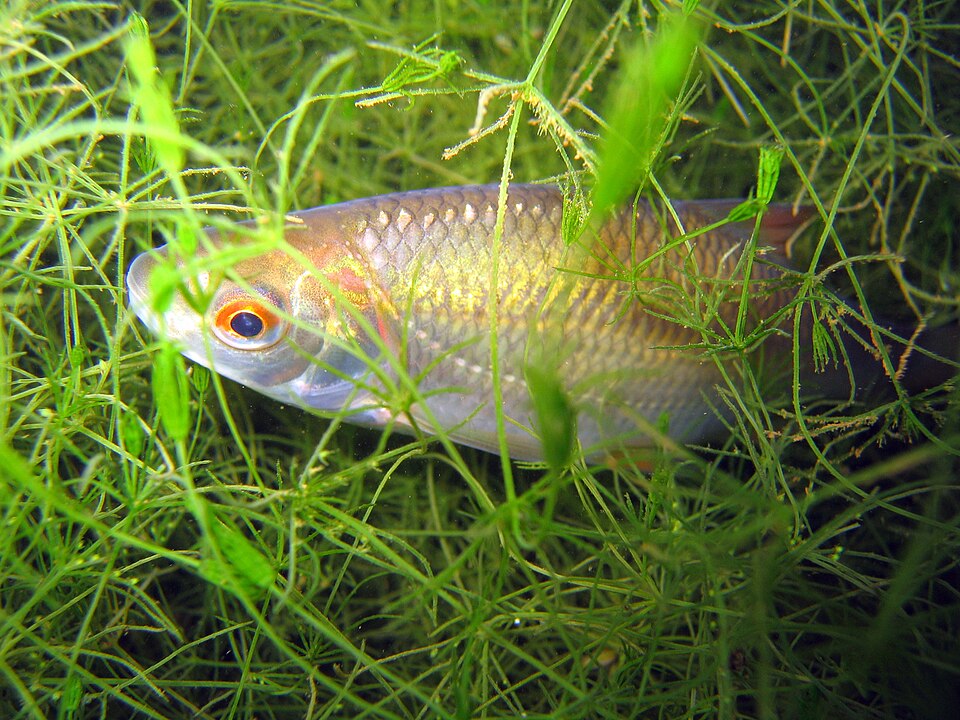
The Roach (Rutilus rutilus) is a freshwater fish of the Cyprinidae family, widely distributed in Europe. It frequents rivers, lakes and ponds with calm or moderately flowing water. Its silvery body and orange-red tinged fins make it easily recognizable. A gregarious species, it often forms large schools. It constitutes a common prey for many aquatic predators and is very popular with amateur fishermen.
The Roach has a spindle-shaped body, slightly laterally compressed, covered in silvery scales. Its iris is typically orange to red, as are its pelvic and anal fins. It is distinguished from similar species such as the rudd by the position of its dorsal fin.
Characteristics
Indicative values: they vary by subspecies, sex and region.
Habitat and distribution
The Roach lives in slow-moving rivers, lakes, ponds and canals rich in vegetation. It appreciates calm waters and can also colonize eutrophic bodies of water. It tolerates a certain turbidity and variations in water quality.
CURRENT RANGE
The species is native to Europe, where it occurs from Great Britain to the Urals. It has also been introduced to other parts of the world for fishing purposes. Its natural range does not extend to North Africa.
Behaviour
The Roach is a gregarious fish that generally lives in schools, especially during the juvenile phases. It is active mainly during the day and moves to deeper waters in winter. It tolerates a wide range of environmental conditions, including lightly polluted or oxygen-deficient waters.
Reproduction
Reproduction takes place in spring, when the water temperature reaches around 12 to 15°C. Females lay thousands of adhesive eggs on aquatic vegetation or submerged substrates. No parental care is given to the eggs or fry after hatching.
Peculiarities
Roach is capable of hybridizing with other cyprinids such as bream, producing individuals with intermediate characters. Its great ecological adaptability makes it a species sometimes considered invasive outside its native area.
Threats and conservation
The Roach is not subject to major threats and its populations are generally stable in Europe. Water pollution and degradation of aquatic habitats can locally affect its populations. It also benefits from active fish management in many countries.
Numbers and trends vary across sources and regions. See the IUCN assessment for the latest reference data.
Gallery
1 documented photographs.
References
Profile updated 30 August 2026 · Reviewed by the TunisieVet editorial team.
Comments (0)
No comments yet.
CONSERVATION STATUS
Least concern (LC)
IUCN source, latest published assessment.
Species health
Documented diseases for this species.
This information is provided for educational purposes only and is not a substitute for a veterinary consultation. If you have any concerns about your animal's health, consult a veterinarian.
Similar animals
Other species documented in Animalpedia.

TunisieVet in your pocket 📱🐾 Access your veterinary services wherever you are. [ Download the app ]
Learn more