
Presentation
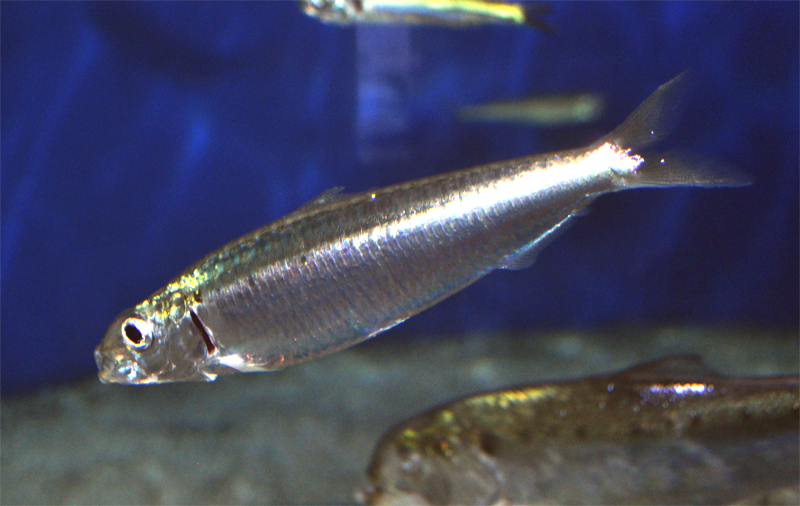
The European Sardine (Sardina pilchardus) is a small pelagic fish living in schools in the northeast Atlantic and the Mediterranean, including Tunisia. It constitutes a major fishery resource for Tunisian fishing, particularly around Sfax, Mahdia and Bizerte. Its silvery spindle-shaped body and modest size facilitate its identification among clupeids. A gregarious species, it feeds on plankton and plays a key role in marine food chains. Its flesh is very appreciated in Tunisian and Mediterranean cuisine.
Elongated fusiform body, laterally compressed, with a blue-green back and silvery sides. Scales large and deciduous, line of dark dots sometimes visible along the flank. Single dorsal fin and ventral fins located below it. Small mouth and striated operculum characteristic of the genus.
Characteristics
Indicative values: they vary by subspecies, sex and region.
Habitat and distribution
Sardine frequents temperate coastal waters and continental shelf areas, generally down to about 100 meters depth. It favors waters rich in plankton, often near areas of upwelling or coastal nutrient supply. The schools move closer to the coast to feed and reproduce. It is found both in the open sea and in coastal areas depending on the season.
CURRENT RANGE
The species occurs in the northeast Atlantic, from southern Norway to Morocco and the Canaries, as well as throughout the Mediterranean and Black Seas. In Tunisia, it is widely fished along the coasts, particularly in the Gulf of Gabès and off Sfax. Its distribution strongly depends on currents and surface temperature. It constitutes one of the most fished species on the Tunisian coast.
Behaviour
Gregarious fish forming large schools that can number several thousand individuals, behavior which limits individual predation. These schools carry out vertical and seasonal migrations linked to water temperature and plankton abundance. The Sardine is most active at night, during which the schools sometimes disperse to feed. It is sensitive to variations in salinity and temperature in the marine environment.
Reproduction
Breeding takes place mainly in autumn and winter in the Mediterranean, with variations depending on the region. Females lay pelagic eggs directly in the water column, without parental care. Fecundity is high, with a female being able to produce several tens of thousands of eggs per season. The larvae join the plankton before gradually forming schools of juveniles.
Peculiarities
The Sardine is often confused with other small clupeids such as the anchovy or the sprat, although its morphological characters clearly distinguish it. Its commercial name “Sardine” has long designated several similar species sold together. It is rich in omega-3 and constitutes a dietary base for many marine predators and seabirds.
Threats and conservation
Overfishing represents the main threat to Sardines populations, particularly in the Mediterranean where some stocks are showing signs of decline. Warming waters and changes in ocean currents also affect the availability of the plankton on which it depends. Coastal pollution and degradation of nursery habitats constitute additional pressures. Quota management measures exist but their application remains variable depending on the area.
Numbers and trends vary across sources and regions. See the IUCN assessment for the latest reference data.
Gallery
1 documented photographs.
References
Profile updated 29 August 2026 · Reviewed by the TunisieVet editorial team.
Comments (0)
No comments yet.
CONSERVATION STATUS
Least concern (LC)
IUCN source, latest published assessment.
Species health
Documented diseases for this species.
This information is provided for educational purposes only and is not a substitute for a veterinary consultation. If you have any concerns about your animal's health, consult a veterinarian.
To discover around: Sardine
Videos, facts, stories and records linked to this species.
Similar animals
Other species documented in Animalpedia.

TunisieVet in your pocket 📱🐾 Access your veterinary services wherever you are. [ Download the app ]
Learn more