Presentation
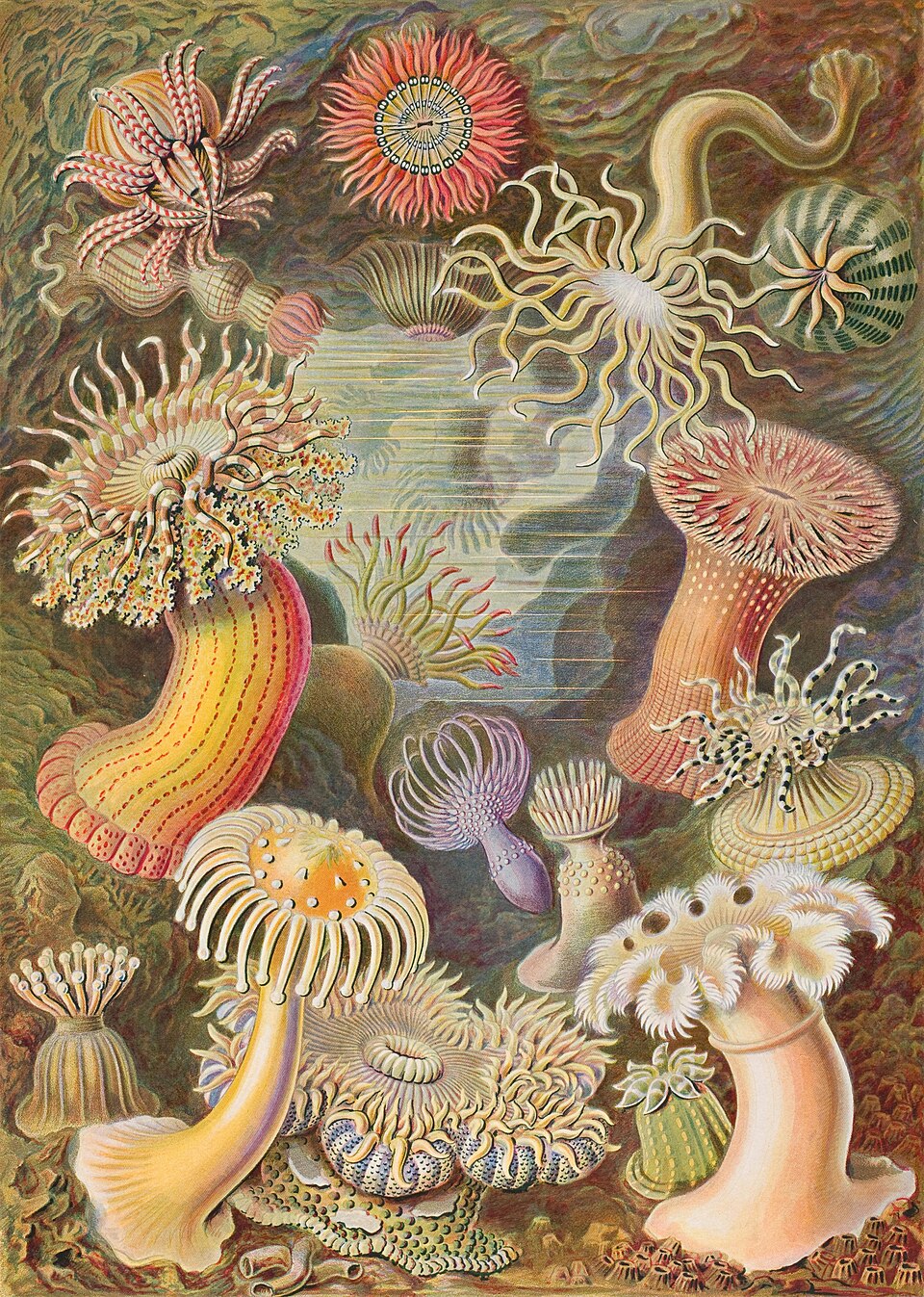
The sea anemone is a marine invertebrate belonging to the class Cnidaria, related to corals and jellyfish. Its soft, cylindrical body is topped with a crown of stinging tentacles arranged around the mouth. Usually anchored to a rock or hard surface by a basal disc, it captures prey using stinging cells called cnidocytes. There are more than a thousand species of sea anemones, varying greatly in size and colour, found in all oceans around the world. Some species live in symbiosis with fish such as clownfish, which take refuge among their tentacles.
The sea anemone's body, called a polyp, is soft and lacks a skeleton, allowing it to contract sharply when threatened. It has a single mouth opening surrounded by stinging tentacles that serves both for taking in food and expelling waste. Colours range from white to green, orange, pink or violet depending on the species and the presence of symbiotic algae. Size varies from a few millimetres to more than one metre in diameter for the largest tropical species.
Characteristics
Indicative values: they vary by subspecies, sex and region.
Habitat and distribution
Sea anemones are fixed to rocky bottoms, coral reefs, sand, or shell debris, ranging from the intertidal zone to several hundred meters deep. They prefer clear, well-oxygenated waters rich in planktonic prey. Some species tolerate wide variations in temperature and salinity in coastal zones. Tropical coral reefs support the greatest diversity of anemone species.
CURRENT RANGE
Sea anemones are found in all oceans worldwide, from warm tropical waters to cold polar waters. They occur throughout the Mediterranean, including the Tunisian coast, as well as in the Indo-Pacific, Atlantic, and Arctic regions. Their range is very broad because they adapt to varying depths and ecological conditions.
Behaviour
The sea anemone is a sessile animal, meaning it remains attached to the same spot most of the time, although it can move very slowly if needed. It responds to touch or threat by retracting its tentacles and contracting upon itself. Some species maintain a symbiotic relationship with clownfish or shrimp, which gain protection from its stinging tentacles in return for food or cleaning services. It can also compete for territory using specialised tentacles called acontia.
Reproduction
Sea anemones reproduce either sexually or asexually depending on the species and environmental conditions. In sexual reproduction, individuals release gametes into the water that develop into swimming larvae called planulas, which then settle on a substrate. Asexual reproduction occurs through polyp division or budding, allowing rapid multiplication in favorable conditions. Sexual maturity and breeding frequency vary considerably among species and with water temperature.
Peculiarities
Some sea anemones are capable of living for several decades or even over a century, which is remarkable for a boneless invertebrate. Their cnidocytes release venom of widely varying potency depending on species, with some capable of causing strong irritation to humans. Symbiosis with clownfish is one of the most studied and emblematic relationships in the marine world. Certain species can reproduce by cloning themselves simply by dividing in two.
Threats and conservation
Sea anemones are threatened by marine pollution, warming waters, and ocean acidification, which disrupt their metabolism and that of their symbiotic algae. Destruction of coral reefs and collection for the aquarium trade weaken certain local populations. Trampling of intertidal zones by human activity can also damage coastal colonies.
Numbers and trends vary across sources and regions. See the IUCN assessment for the latest reference data.
Gallery
1 documented photographs.
References
Profile updated 15 September 2026 · Reviewed by the TunisieVet editorial team.
Comments (0)
No comments yet.
CONSERVATION STATUS
Data deficient (DD)
IUCN source, latest published assessment.
Species health
Documented diseases for this species.
Find a veterinarianThis information is provided for educational purposes only and is not a substitute for a veterinary consultation. If you have any concerns about your animal's health, consult a veterinarian.
To discover around: Sea anemone
Videos, facts, stories and records linked to this species.
Similar animals
Other species documented in Animalpedia.