
Presentation
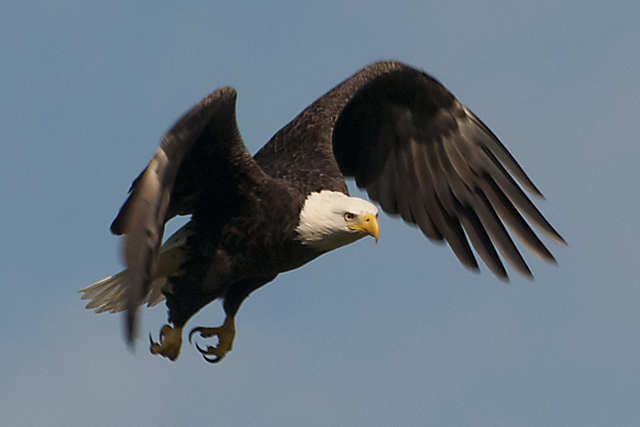
The Sea eagle designates several species of piscivorous raptors of the genus Haliaeetus, the best known of which is the white-tailed eagle (Haliaeetus albicilla). This large raptor frequents coasts, lakes and estuaries rich in fish and aquatic birds. It can be recognized by its large wingspan, its brown plumage and its characteristic white tail in adults. It catches its prey in low flight over the water or occasionally carrion them. Formerly persecuted, it is the subject of reintroduction programs in several European countries. The body is massive, with broad, rectangular wings well suited to gliding. The powerful, hooked bill, yellow in adults, is used to tear apart fish and aquatic prey. The short, white tail in adults contrasts with the brown plumage of the rest of the body. The sturdy claws have bare fingers, useful for gripping slippery prey.
Characteristics
Indicative values: they vary by subspecies, sex and region.
Habitat and distribution
The species frequents marine coasts, large lakes, estuaries and wetlands rich in fish. It looks for quiet nesting sites, often on cliffs or on tall trees close to water. The presence of abundant food resources is decisive for the establishment of a territory.
CURRENT RANGE
The white-tailed eagle is found in Northern Europe, Russia and Northeast Asia. Populations also exist in Central Europe thanks to reintroduction programs. The species is occasionally observed in the Mediterranean during winter movements, but it does not breed in North Africa.
Behaviour
The Sea eagle is a territorial bird that defends a large area around its nest. He is generally solitary or lives in a stable couple over several years. The flight is majestic, alternating slow beats and long gliding phases. It can be opportunistic and scavenger, especially in winter.
Reproduction
The couple builds a voluminous nest of branches, often reused and enlarged from year to year. The female generally lays one to three eggs, incubated for about five weeks. The young fledge after ten to twelve weeks but remain dependent on the parents for a few more weeks. Sexual maturity is reached around four to five years of age.
Peculiarities
The term “Sea eagle” brings together several species of the Haliaeetus genus, including the bald eagle, emblem of the United States. These birds of prey can carry fish almost as heavy as themselves thanks to their powerful claws. Their keen eyesight allows them to spot a fish on the surface from a great height.
Threats and conservation
The main historical threats have been the use of organochlorine pesticides, poisoning and direct fire. The degradation of wetlands and water pollution continue to weaken certain local populations. Strict protection measures and reintroductions have enabled a clear recovery in several regions.
Numbers and trends vary across sources and regions. See the IUCN assessment for the latest reference data.
Gallery
1 documented photographs.
References
Profile updated 03 September 2026 · Reviewed by the TunisieVet editorial team.
Comments (0)
No comments yet.
CONSERVATION STATUS
Least concern (LC)
IUCN source, latest published assessment.
Species health
Documented diseases for this species.
See the 7 diseases of this species Find a veterinarianThis information is provided for educational purposes only and is not a substitute for a veterinary consultation. If you have any concerns about your animal's health, consult a veterinarian.
To discover around: Sea eagle
Videos, facts, stories and records linked to this species.
Similar animals
Other species documented in Animalpedia.

TunisieVet in your pocket 📱🐾 Access your veterinary services wherever you are. [ Download the app ]
Learn more