
Presentation
The shrimp is a small decapod crustacean found in most seas and freshwater bodies worldwide. Its elongated, segmented body is protected by a translucent or coloured shell depending on the species, and ends in a muscular abdomen folded under the thorax. It moves by swimming using its swimming legs and can perform rapid backward flips to escape predators. The term "shrimp" actually encompasses many different species, harvested both through fishing and aquaculture. In Tunisia, it is a highly consumed and widely traded seafood product, sold fresh or frozen.
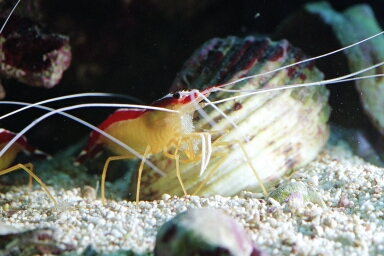
The shrimp's body is divided into a cephalothorax and a segmented abdomen, both covered by a chitinous exoskeleton that it sheds regularly as it grows. It has two long sensory antennae, stalked compound eyes, and five pairs of thoracic legs. Its size typically ranges from a few centimetres to about twenty centimetres depending on the species.
Characteristics
Indicative values: they vary by subspecies, sex and region.
Habitat and distribution
Shrimp occupy a wide range of aquatic environments, from coastal marine waters to estuaries and freshwater rivers. Some species live in deep waters while others prefer lagoons and coastal wetlands. They generally favor sandy, rocky, or vegetated substrates that provide shelter.
CURRENT RANGE
Shrimp are found in nearly all oceans worldwide and in many freshwater rivers of temperate and tropical regions. In the Mediterranean, several species are commonly caught, particularly along the coasts of Tunisia. Their worldwide distribution makes them a highly diverse group of animals and widely exploited resource.
Behaviour
Shrimp often exhibit gregarious behaviour, living in groups of varying density depending on the species. They are primarily active at night, hiding during the day in sand, rocks, or aquatic vegetation. Some species migrate between coastal waters and estuaries according to their life cycle.
Reproduction
The female carries her fertilized eggs under the abdomen until they hatch. Planktonic larvae pass through several developmental stages before reaching the juvenile shrimp form. Growth continues through a series of successive molts until adult size is reached.
Peculiarities
Some shrimp species are capable of changing sex during their lifetime, a phenomenon called protandry. Others, such as the tiger shrimp or pistol shrimp, produce a powerful snapping sound with their claws to stun their prey. The transparency of the shell in several species provides them effective camouflage against predators.
Threats and conservation
Overfishing and degradation of coastal habitats, particularly the destruction of mangroves linked to intensive aquaculture, threaten certain wild populations. Water pollution and climate change also affect reproduction and larval survival. However, the majority of shrimp species are not considered threatened on a global scale.
Numbers and trends vary across sources and regions. See the IUCN assessment for the latest reference data.
Gallery
1 documented photographs.
References
Profile updated 13 September 2026 · Reviewed by the TunisieVet editorial team.
Comments (0)
No comments yet.
CONSERVATION STATUS
Least concern (LC)
IUCN source, latest published assessment.
Species health
Documented diseases for this species.
Find a veterinarianThis information is provided for educational purposes only and is not a substitute for a veterinary consultation. If you have any concerns about your animal's health, consult a veterinarian.
To discover around: Shrimp
Videos, facts, stories and records linked to this species.
Similar animals
Other species documented in Animalpedia.
