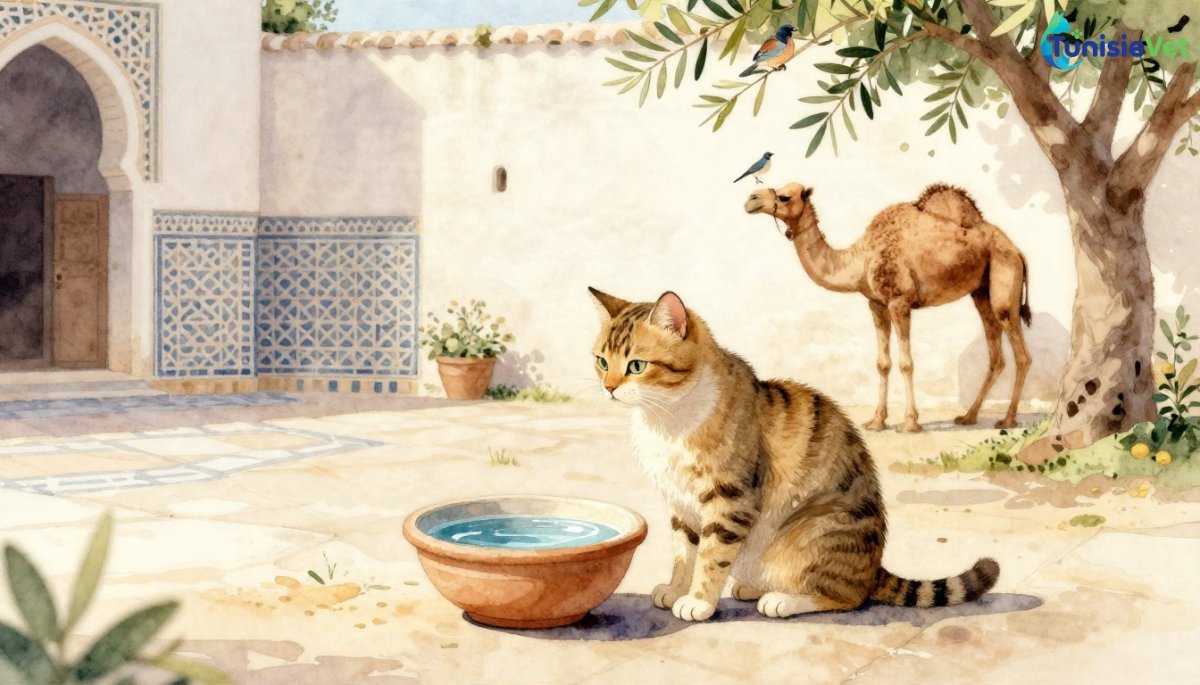
A pet in the home brings joy, but also duties. Drawing on the Qur'an and on hadiths reported by al-Bukhari, Muslim and Abu Dawud, let us see how Islam links the pleasure of having animals close to us with the responsibility of treating them well.
Every morning, a child in Medina would visit his little bird, a "nughayr", as this small songbird was called. One day the bird died, and the child was deeply saddened. The Prophet ﷺ, seeing him distressed, gently asked him: "O Abu Umayr, what happened to the little bird?" This account is reported in Sahih al-Bukhari and Sahih Muslim. It shows us that a beloved animal can hold a real place in a child's heart, and that this affection deserves to be respected.
Pleasure: a beauty bestowed
The Qur'an does not hide the joy that animals bring. In Surah An-Nahl, after recalling the benefits of livestock, God mentions the beauty they bring to people, when they are brought back to the stable in the evening and when they are led out to pasture in the morning.
﴿ وَلَكُمْ فِيهَا جَمَالٌ حِينَ تُرِيحُونَ وَحِينَ تَسْرَحُونَ ﴾
"And in them there is beauty for you when you bring them back in the evening and when you lead them out to pasture."
(Surah An-Nahl, verse 6)
Watching a herd come home at nightfall, hearing a bird sing, stroking a purring cat: all of these are among life's pleasures. Yet this pleasure is never presented as coming without a counterpart.
Responsibility: a being that depends on us
In Sahih al-Bukhari and Sahih Muslim, the Prophet ﷺ speaks of a woman who was punished because of a cat. She had confined it until it died; she gave it neither food nor water while she held it, and did not let it search for its food on the earth. The lesson of the hadith is clear: whoever keeps an animal with them becomes responsible for its food, its water, and its freedom to feed itself.
Another account, reported by Abu Dawud, tells of a camel. The Prophet ﷺ entered the garden of a man of the Ansar, where a camel was moaning and its eyes were weeping. The Prophet ﷺ passed his hand behind its ears, and the animal calmed down. He then asked who its owner was, and said in substance: do you not fear God concerning this beast which He has placed in your possession? It has complained to me that you starve it and overwork it.
Conversely, Sahih al-Bukhari and Sahih Muslim relate the story of a man who, on a journey, felt a fierce thirst. He went down into a well and drank. Coming back up, he saw a dog panting and licking the damp earth because of its thirst. He thought that this dog was suffering as he had. He went back down, filled his leather boot with water, held it in his mouth to climb back up, and gave the dog water to drink. God thanked him for this and forgave him. The companions then asked: "Is there a reward for us in (caring for) animals?" He replied: "There is a reward for every living creature that has a moist liver."
Between joy and duty
Thus, owning an animal is neither a simple game nor a simple burden. It is a trust. The pleasure of its company goes hand in hand with the duty to feed it, give it water, care for it, and neither overload it nor confine it.
Before welcoming a companion with fur, feathers or hooves, each person may ask: will I have the time, the means and the patience to look after it every day? Compassion toward animals begins with this question. A bowl of fresh water, a meal at regular times, a gentle gesture: this is how pleasure becomes gratitude and responsibility becomes kindness.