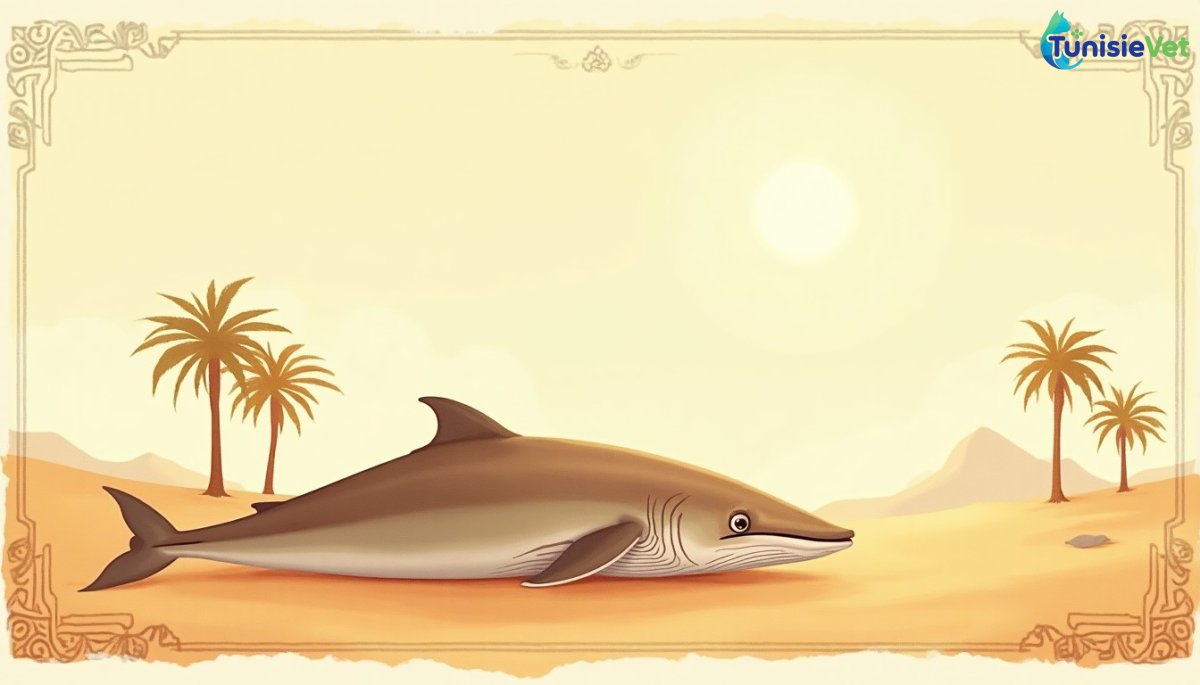
Swallowed by an enormous fish in the depths of a dark sea, the Prophet Yunus (Jonah) raised a prayer that was forever inscribed in the Qur'an. We look back at this story in which an animal becomes the instrument of a universal spiritual lesson.
Yunus (Jonah), upon him be peace, was sent to a people who stubbornly refused to listen to his message. Discouraged by their rejection, he left his community without waiting for divine permission to do so, and boarded a ship headed for a distant land.
The Storm and the Drawing of Lots
In the midst of the sea, the boat was shaken by a storm so violent that the crew feared shipwreck. According to the account related in Surah As-Saffat, the sailors decided to draw lots to determine who would be thrown overboard to lighten the ship—a practice of that time in cases of extreme danger. Yunus was selected, repeatedly according to some scholars, and he eventually threw himself into the sea.
The Belly of the Great Fish
It was then that Allah sent an enormous fish which swallowed him, not to devour him, but to preserve him, as the Qur'an makes clear. Yunus found himself plunged into complete darkness: that of the animal's belly, that of the ocean depths, and that of the night. In this threefold darkness, knowing himself utterly helpless, he turned to his Lord with a prayer that has since become a model of repentance for the believers.
﴿ فَنَادَىٰ فِي الظُّلُمَاتِ أَن لَّا إِلَـٰهَ إِلَّا أَنتَ سُبْحَانَكَ إِنِّي كُنتُ مِنَ الظَّالِمِينَ ﴾
He called out in the darknesses: "There is no deity except You. Exalted are You! I have been among the wrongdoers."
(Surah Al-Anbiya, verse 87)
This prayer, known as the "dua of Yunus," expresses at once the recognition of Allah's oneness, His glorification, and a humble confession of fault. The Qur'an makes clear that Allah answered his supplication and delivered him from his distress, as mentioned in Surah Al-Anbiya—thus does Allah save the sincere believers.
The Fish Casts Yunus Upon the Shore
By divine command, the fish cast Yunus upon a barren land, weakened and without strength. Allah then caused a plant to grow above him, often identified as a gourd, whose broad leaves offered him shade and comfort during his recovery, as related in Surah As-Saffat. Yunus then returned to his people, who this time believed in his message and were spared from the punishment that had threatened them—a unique case highlighted in the Qur'an where an entire people was saved after believing.
This account shows how a simple sea creature, a fish whose exact size and species are not specified in the texts, became by Allah's will the instrument of trial and deliverance. The animal did not act of its own accord: it obeyed an order that transcends its nature, reminding us that all creation, even the creatures of the abyss, is subject to its Creator.
From this story, believers draw a lesson in patience and humility, but also a subtle reminder about the place of animals in the divine order: they are never mere stage scenery, but creatures in their own right, capable of being part of the greatest designs. To remember this calls us to treat every animal, from the smallest to the most immense, with the respect and gentleness it deserves as a living being entrusted to our care.