
Presentation
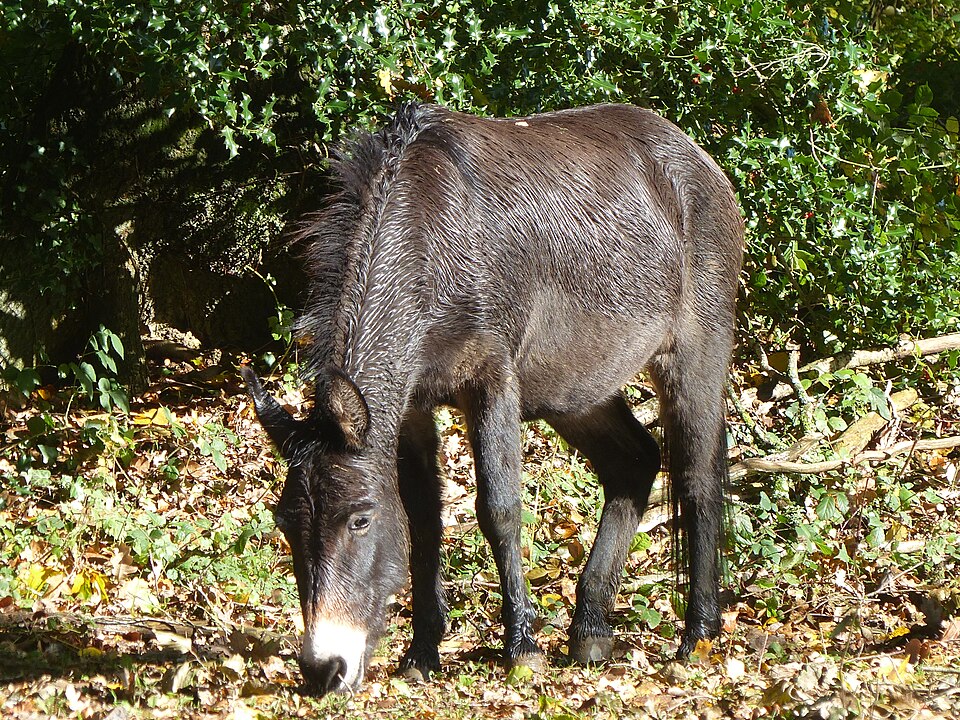
The bardot is a hybrid resulting from the crossing between a male horse (stallion) and a female donkey. It is distinguished from the mule, resulting from the reverse crossing between a donkey and a mare, by slightly different morphological proportions. Used since Antiquity as a pack and draft animal, it is renowned for its robustness and its frugality in food. Like most equine hybrids, it is sterile in almost all cases. In Tunisia and the Maghreb, it has long been used in agricultural work and transport in rural and mountainous areas.
The bardot has an intermediate morphology between that of the horse and the donkey, with ears shorter than those of the mule and a head closer to that of the horse. Its coat varies depending on that of the parents, often gray, bay or black. It has powerful musculature and robust limbs adapted to difficult terrain. Its size is generally slightly smaller than that of the mule.
Characteristics
Indicative values: they vary by subspecies, sex and region.
Habitat and distribution
bardot is high on farms, rural areas and mountainous regions where terrain limits the use of motorized vehicles. It is particularly used in uneven terrain for transporting loads. It is found both in plains and in mountain areas depending on local needs.
CURRENT RANGE
bardot is present in many regions of the world where traditional horse breeding persists, notably around the Mediterranean basin, North Africa, Asia and Latin America. Its presence directly depends on human breeding, because it does not exist in the wild. The Maghreb, including Tunisia, has a tradition of using this animal in rural areas.
Behaviour
The bardot is known to be calm, enduring and less nervous than the horse, while inheriting a certain tenacity from the donkey. It attaches easily to humans when handled well and tolerates heat and prolonged effort relatively well. It generally lives alone or in small groups on a farm. Its behavior makes it suitable for pack, saddle or light hauling.
Reproduction
The bardot is a hybrid resulting from the mating of a stallion and a donkey. Due to the difference in the number of chromosomes between the horse and the donkey, it is almost always sterile, in both males and females in the vast majority of cases. Its gestation, carried by the donkey, lasts approximately eleven to twelve months. It therefore does not reproduce naturally within a population.
Peculiarities
The bardot is often confused with the mule, although the two hybrids differ depending on the sex of the parents involved in the cross. It inherits a mixture of physical and behavioral characteristics from the horse and the donkey. Its almost systematic sterility makes it an animal always the result of a cross controlled by the breeder.
Threats and conservation
Not existing in the wild, bardot is not subject to traditional conservation threats. However, its use is declining with the increasing mechanization of agriculture, which is gradually reducing the high numbers of people. It is not subject to any particular protection status.
Numbers and trends vary across sources and regions. See the IUCN assessment for the latest reference data.
Gallery
1 documented photographs.
References
Profile updated 27 August 2026 · Reviewed by the TunisieVet editorial team.
Comments (0)
No comments yet.
CONSERVATION STATUS
Least concern (LC)
IUCN source, latest published assessment.
Species health
Documented diseases for this species.
See the 4 diseases of this species Find a veterinarianThis information is provided for educational purposes only and is not a substitute for a veterinary consultation. If you have any concerns about your animal's health, consult a veterinarian.
Similar animals
Other species documented in Animalpedia.

TunisieVet in your pocket 📱🐾 Access your veterinary services wherever you are. [ Download the app ]
Learn more