
Presentation
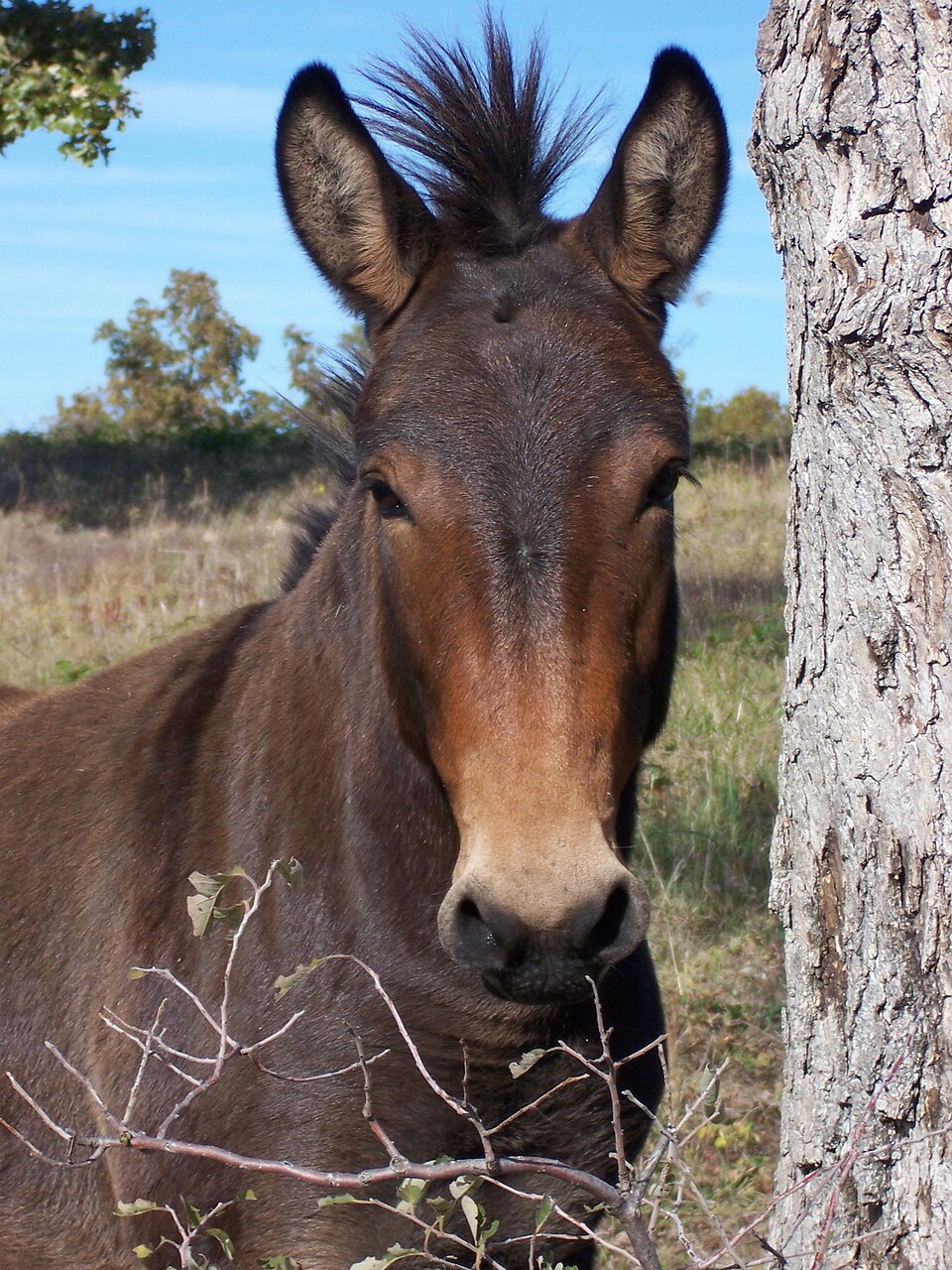
The Mule is a hybrid animal resulting from the crossing between a male donkey and a mare. Domesticated since Antiquity, it combines the strength of the horse with the endurance and hardiness of the donkey, making it an exceptional mount and beast of burden.
The Mule has an intermediate morphology: elongated head and ears of the donkey, robust silhouette of the horse. Its coat varies from brown to gray, often with a stripe of Mule (dark stripe along the back). Its hooves are hard and resistant.
Characteristics
Indicative values: they vary by subspecies, sex and region.
Habitat and distribution
The Mule adapts to all environments: mountains, hills, farms and meadows. It tolerates uneven and difficult-to-access terrain well, while thriving in agricultural and cultivated areas.
CURRENT RANGE
Mule is bred on all continents, including Latin America, South Asia, Europe and North Africa. Its distribution follows that of the agricultural and mountainous regions of the world.
Behaviour
The Mule is known for its intelligence, relative docility and prudence. He has an excellent sense of balance and a great capacity for learning. Contrary to popular belief, he is not really stubborn but rather cautious and thoughtful before obeying.
Reproduction
Mule is generally sterile due to its odd number of chromosomes (63), although very rare cases of fertility have been documented. It therefore does not reproduce naturally and must be produced by voluntary crossing.
Peculiarities
The Mule combines the exceptional endurance of the donkey with the strength of the horse, making it a versatile animal. It has better vision than the horse and can see almost completely around it, giving it a natural advantage in difficult terrain.
Threats and conservation
The Mule is not threatened as a species. Its breeding is stable and regulated in most regions, and there are no major natural or anthropogenic threats affecting the population.
Numbers and trends vary across sources and regions. See the IUCN assessment for the latest reference data.
Gallery
1 documented photographs.
References
Profile updated 27 August 2026 · Reviewed by the TunisieVet editorial team.
Comments (0)
No comments yet.
CONSERVATION STATUS
Not evaluated (NE)
IUCN source, latest published assessment.
Species health
Documented diseases for this species.
See the 4 diseases of this species Find a veterinarianThis information is provided for educational purposes only and is not a substitute for a veterinary consultation. If you have any concerns about your animal's health, consult a veterinarian.
Related species
Similar animals
Other species documented in Animalpedia.

TunisieVet in your pocket 📱🐾 Access your veterinary services wherever you are. [ Download the app ]
Learn more