
Presentation
The African savanna elephant is the largest living land animal. This imposing herbivorous mammal is distinguished by its flexible trunk with thousands of muscles, its large fan-shaped ears and its ivory tusks. A major symbol of African wildlife, it plays a fundamental ecological role in the ecosystems it inhabits.
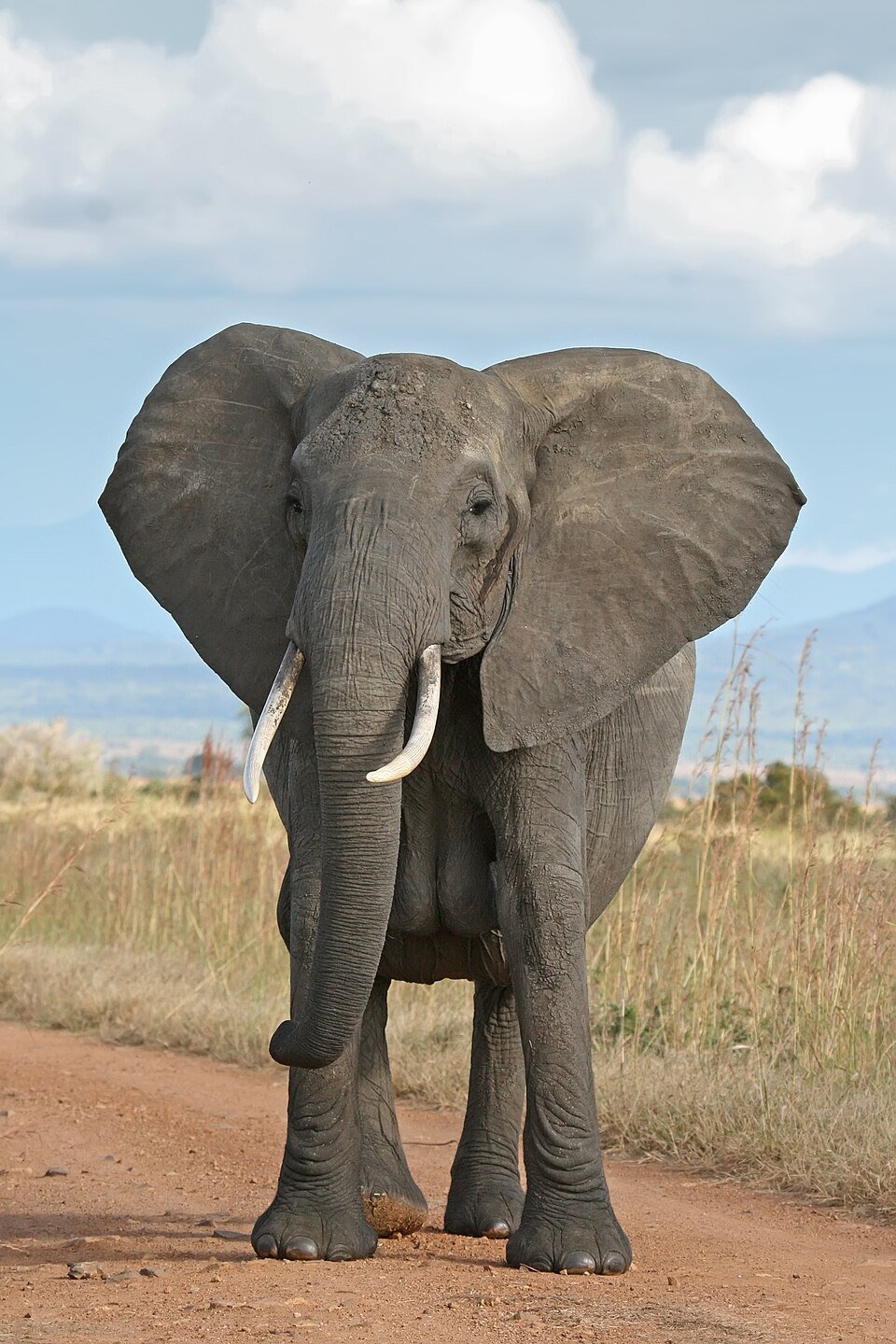
The elephant's skin is thick and gray, often covered in protective mud. Its giant ears play a crucial role in thermal regulation. The proboscis is an extraordinary sensory and manipulative organ containing more than 40,000 muscles. The tusks, which can be very long, are actually modified baby teeth that grow throughout life.
Did you know?
Are elephants afraid of mice?
Characteristics
Indicative values: they vary by subspecies, sex and region.
Habitat and distribution
The savannah elephant inhabits the open, semi-arid savannahs and wooded grasslands of sub-Saharan Africa. It also frequents sparse forests and areas close to water points. This animal requires large territories to find enough food and water throughout the year.
CURRENT RANGE
African savanna elephant is found mainly in sub-Saharan Africa, from Senegal in the west to Somalia in the east, and from the southern Sahara to Botswana and South Africa. Its populations are fragmented and small, concentrated in national parks and protected reserves.
Behaviour
Elephants are extremely social animals living in matriarchal groups led by the oldest female. They are intelligent, endowed with exceptional memory and capable of emitting infra-sound to communicate over long distances. They express great empathy and show distress in front of their deceased peers.
Reproduction
Elephant gestation lasts about 22 months, the longest among land mammals. A female gives birth to a single young, rarely two. The young elephant remains dependent on its mother for several years and benefits from the care of the entire group until it becomes completely independent.
Peculiarities
The elephant's trunk is a marvel of adaptation: it can detect odors from a distance and manipulate objects as small as a peanut. Elephants are also known to use natural tools like sticks to scratch or access food. Their intelligence equals that of great apes and cetaceans.
Threats and conservation
The savannah elephant faces major threats: poaching for ivory, habitat loss due to agricultural and urban expansion, and conflicts with local populations. Climate change is also worsening drought and limiting access to water and food, forcing migration and confrontation.
Numbers and trends vary across sources and regions. See the IUCN assessment for the latest reference data.
Gallery
1 documented photographs.
References
UICN — Liste rouge des espèces menacées
Profile updated 30 August 2026 · Reviewed by the TunisieVet editorial team.
Comments (0)
No comments yet.
CONSERVATION STATUS
Endangered (EN)
IUCN source, latest published assessment.
Species health
Documented diseases for this species.
This information is provided for educational purposes only and is not a substitute for a veterinary consultation. If you have any concerns about your animal's health, consult a veterinarian.
Related species
Did you know? — African savanna elephant
To discover around: African savanna elephant
Videos, facts, stories and records linked to this species.
Similar animals
Other species documented in Animalpedia.

TunisieVet in your pocket 📱🐾 Access your veterinary services wherever you are. [ Download the app ]
Learn more