
Presentation
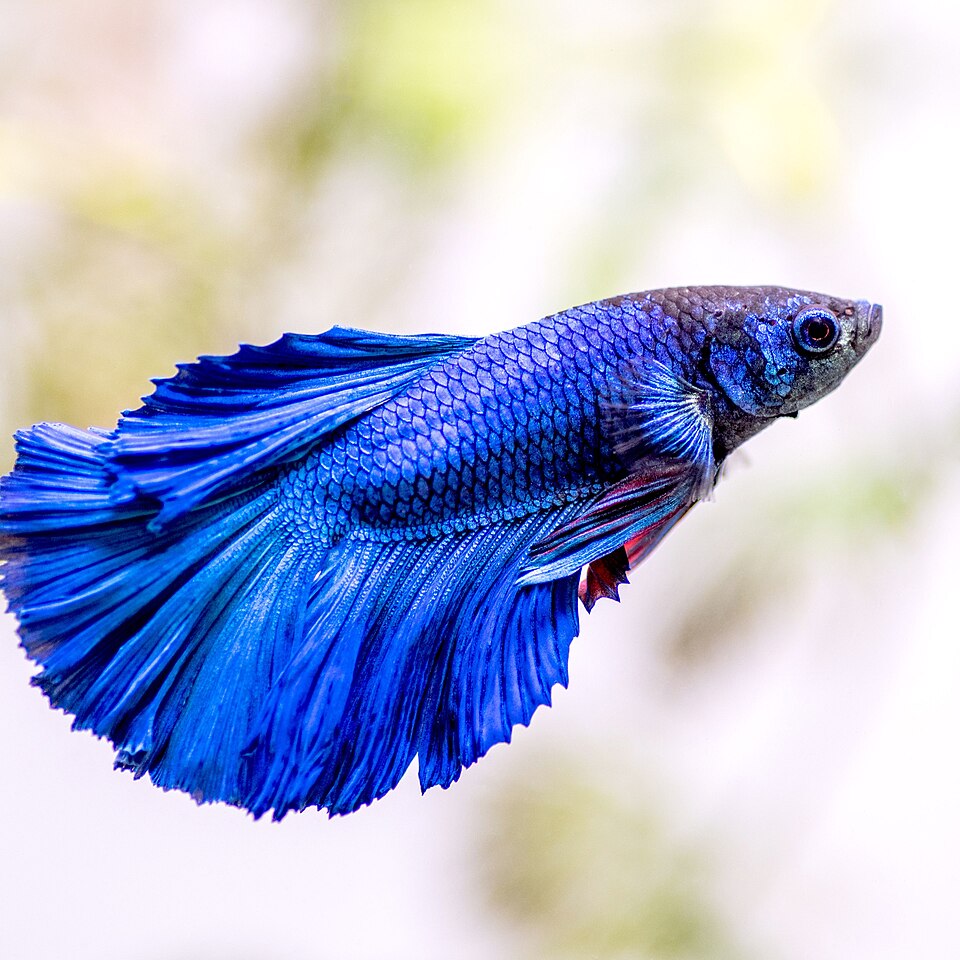
The Siamese fighting fish is a small freshwater fish native to Southeast Asia, famous for its vibrant colors and majestic fins. Domesticated for centuries in Thailand, it has become one of the most popular aquarium fish in the world.
The Siamese fighting fish sports a laterally compressed body and ample, flowing fins, particularly developed in males. Its scales glow in vibrant colors – blue, red, green or black – which intensify in cases of aggression or territoriality.
Characteristics
Indicative values: they vary by subspecies, sex and region.
Habitat and distribution
In the wild, Siamese fighting fish occupies freshwater rivers, lakes and marshes in Southeast Asia, particularly Thailand, Laos and Cambodia. It prefers calm, shallow waters, often rich in aquatic vegetation.
CURRENT RANGE
Siamese fighting fish is endemic to Southeast Asia, with a natural range limited to Thailand, Laos, Cambodia and possibly Vietnam. However, it has been introduced to many countries via the aquarium trade.
Behaviour
The Siamese fighting fish is known for its extreme territorial aggressiveness, particularly among males who fight violently to defend their domain. Males must be kept solitary in an aquarium, while females can live in small, peaceful groups.
Reproduction
The reproduction of the Siamese fighting fish is very developed: the male builds a nest of bubbles on the surface to accommodate the eggs. After fertilization, he fiercely guards the brood, while the female must be removed so as not to be harmed by his aggression.
Peculiarities
The Siamese fighting fish has a respiratory labyrinth, an additional organ that allows it to breathe atmospheric air directly at the surface – a remarkable adaptation to poorly oxygenated waters. This ability allows him to survive in hostile conditions.
Threats and conservation
Siamese fighting fish is classified as vulnerable due to the degradation and fragmentation of its natural habitats, caused by swamp drainage, pollution and urbanization in Southeast Asia. Overexploitation for the aquarium trade also poses a threat.
Numbers and trends vary across sources and regions. See the IUCN assessment for the latest reference data.
Gallery
1 documented photographs.
References
UICN — Liste rouge des espèces menacées
Profile updated 17 August 2026 · Reviewed by the TunisieVet editorial team.
Comments (0)
No comments yet.
CONSERVATION STATUS
Vulnerable (VU)
IUCN source, latest published assessment.
Species health
Documented diseases for this species.
See the 6 diseases of this species Find a veterinarianThis information is provided for educational purposes only and is not a substitute for a veterinary consultation. If you have any concerns about your animal's health, consult a veterinarian.
Similar animals
Other species documented in Animalpedia.

TunisieVet in your pocket 📱🐾 Access your veterinary services wherever you are. [ Download the app ]
Learn more