
Presentation
The Scorpionfish is a marine fish of the Scorpaenidae family, recognizable by its stocky body, large head and venomous spiny fins. It lives near rocky bottoms and shallow areas in the Mediterranean and the near Atlantic. Its remarkable camouflage allows it to blend in among rocks and algae to surprise its prey. It is best known in Tunisia and the Mediterranean basin for its flesh, prized in cooking, particularly in fish soup. Its dorsal spines can inflict painful stings but are rarely dangerous to humans.
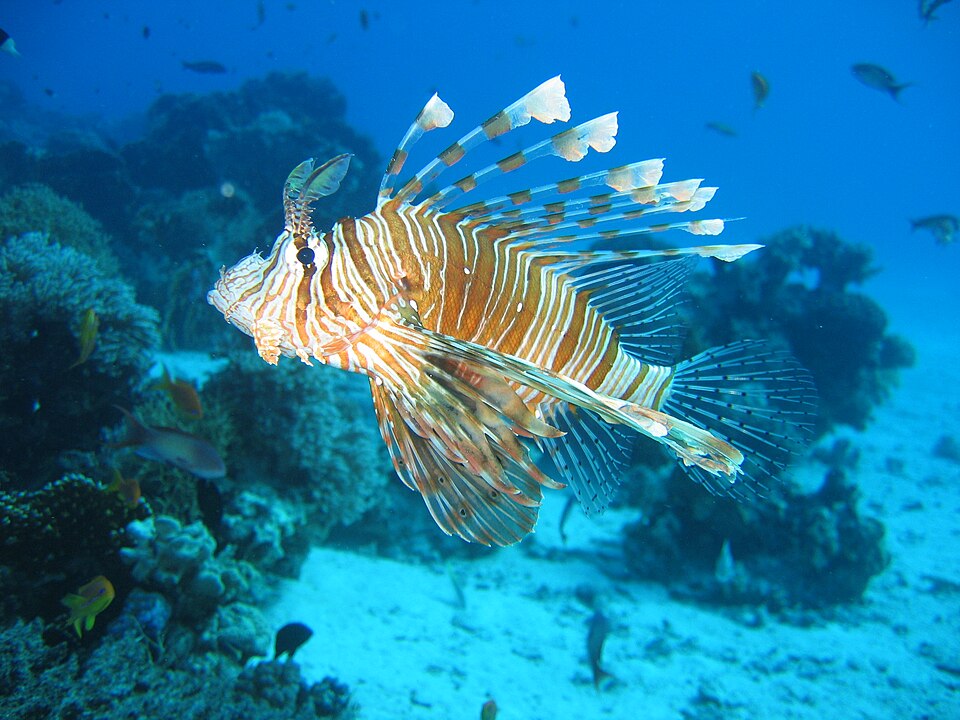
The Scorpionfish's body is massive, covered in skin growths and reddish-brown hues that encourage mimicry. Its head is large, decorated with thorns and small fleshy protuberances around the mouth and eyes. The dorsal fins bear spiny rays connected to venom glands.
Characteristics
Indicative values: they vary by subspecies, sex and region.
Habitat and distribution
Scorpionfish frequents rocky bottoms, shallow littoral zones and seagrass beds. It likes crevices, faults and crevices where it can hide. It is found from the surface to several tens of meters deep.
CURRENT RANGE
The species is widely distributed in the Mediterranean Sea, including along the Tunisian coast, as well as in the Eastern Atlantic near the European and African coasts. It is common in the rocky coastal areas of these regions.
Behaviour
This fish is solitary and sedentary, often staying in one place for long periods. It is not very active and prefers immobility to deceive its prey and predators thanks to its camouflage. It is rather active at dusk and at night.
Reproduction
Reproduction occurs by spawning, generally in spring and summer depending on temperate waters. The eggs are grouped in floating gelatinous clumps released into open water. The planktonic larvae drift before reaching the rocky bottoms at a juvenile stage.
Peculiarities
Its dorsal spines are venomous and cause a painful sting on contact, although rarely fatal to humans. Its exceptional camouflage makes it a formidable predator despite its apparent immobility. It is highly sought after in Mediterranean cuisine for its firm and tasty flesh.
Threats and conservation
Scorpionfish is not subject to major threats identified at the scale of its overall population. Coastal fishing and the degradation of coastal rocky habitats can locally affect certain populations. It is not considered an endangered species.
Numbers and trends vary across sources and regions. See the IUCN assessment for the latest reference data.
Gallery
1 documented photographs.
References
Profile updated 31 August 2026 · Reviewed by the TunisieVet editorial team.
Comments (0)
No comments yet.
CONSERVATION STATUS
Least concern (LC)
IUCN source, latest published assessment.
Species health
Documented diseases for this species.
This information is provided for educational purposes only and is not a substitute for a veterinary consultation. If you have any concerns about your animal's health, consult a veterinarian.
Similar animals
Other species documented in Animalpedia.

TunisieVet in your pocket 📱🐾 Access your veterinary services wherever you are. [ Download the app ]
Learn more