
Presentation
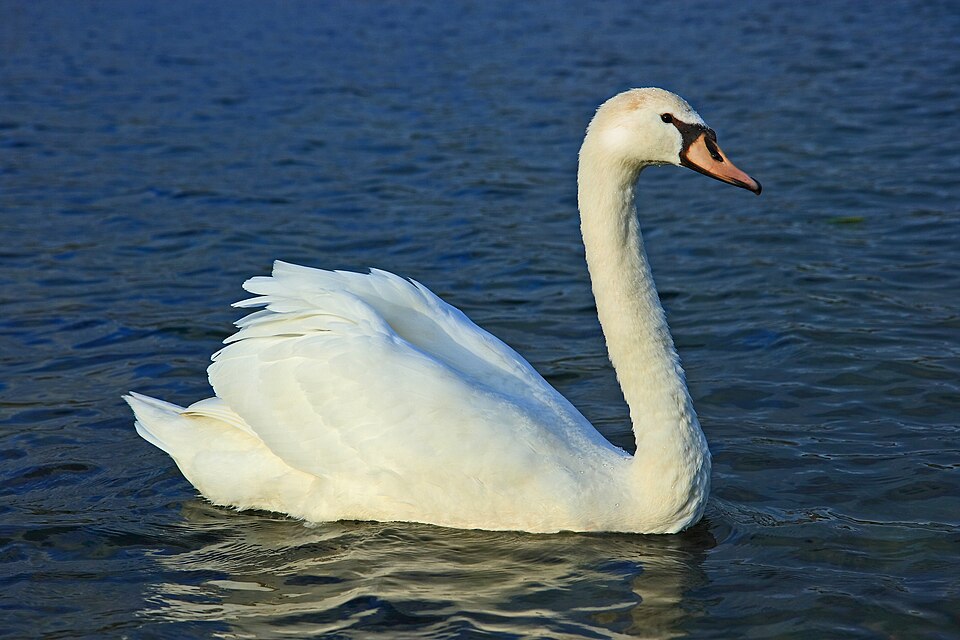
The swan is a large waterfowl recognised by its long, flexible neck and generally pure white plumage. The mute swan, the most common species in Europe, has an orange bill topped with a characteristic black knob. It moves gracefully on calm water, where it feeds on aquatic vegetation. Its impressive wingspan and elegant silhouette make it one of the most recognisable birds of temperate wetlands. Despite its peaceful appearance, it is a territorial animal capable of becoming aggressive to defend its nest. It ranks among the largest flying birds in existence.
The swan has a long S-shaped neck made up of numerous cervical vertebrae, allowing it to reach submerged vegetation. Its dense, waterproof plumage is maintained by an uropygial gland that produces a protective oil. The webbed feet, positioned far back on the body, make it an excellent swimmer but an awkward walker on land.
Characteristics
Indicative values: they vary by subspecies, sex and region.
Habitat and distribution
The swan frequents lakes, ponds, slow-moving rivers, and wetlands rich in aquatic vegetation. It also favors urban parks and developed water bodies where it finds food and peaceful surroundings. In winter, some populations migrate to coastal areas or estuaries that are less prone to freezing.
CURRENT RANGE
The mute swan originates from temperate Europe and Asia, but has been successfully introduced to North America, Australia, and New Zealand. Other swan species occupy distinct ranges, such as the black swan in Australia or the trumpeter swan in North America. In Tunisia, the species is not native but may be seen in captivity in certain parks.
Behaviour
The swan is a monogamous bird that often forms a lasting pair bond, sometimes for life. It vigorously defends its territory and nest against intruders, including humans, by raising its wings and hissing. Gregarious outside the breeding season, it can gather in large groups at wintering sites.
Reproduction
The female builds a large nest of reeds and aquatic plants near the water, where she lays between 4 and 8 eggs. Incubation lasts approximately 35 to 42 days and is mainly carried out by the female, while the male stands guard nearby. The young, called cygnets, are precocial and follow their parents in the water shortly after hatching, remaining under their protection for several months.
Peculiarities
The mute swan produces few vocal sounds but makes a characteristic rustling sound with its wings in flight. The scientific name Cygnus olor refers to its reputation for relative silence compared with other species such as the whooper swan. It is associated in many cultures with faithfulness and elegance.
Threats and conservation
Wild swan populations are globally stable and do not face major threats on a worldwide scale. Locally, water pollution, destruction of wetlands, and lead poisoning from ingestion of spent ammunition can affect certain individuals. Collisions with electrical lines also represent a significant risk.
Numbers and trends vary across sources and regions. See the IUCN assessment for the latest reference data.
Gallery
1 documented photographs.
References
Profile updated 06 September 2026 · Reviewed by the TunisieVet editorial team.
Comments (0)
No comments yet.
CONSERVATION STATUS
Least concern (LC)
IUCN source, latest published assessment.
Species health
Documented diseases for this species.
Find a veterinarianThis information is provided for educational purposes only and is not a substitute for a veterinary consultation. If you have any concerns about your animal's health, consult a veterinarian.
To discover around: Swan
Videos, facts, stories and records linked to this species.
RECORD
up to 15 kg / 2.4 m wingspan
One of the world's largest flying birds
These measurements are from adult male mute swans, among the largest flying bird species i...
Similar animals
Other species documented in Animalpedia.

TunisieVet in your pocket 📱🐾 Access your veterinary services wherever you are. [ Download the app ]
Learn more