Presentation
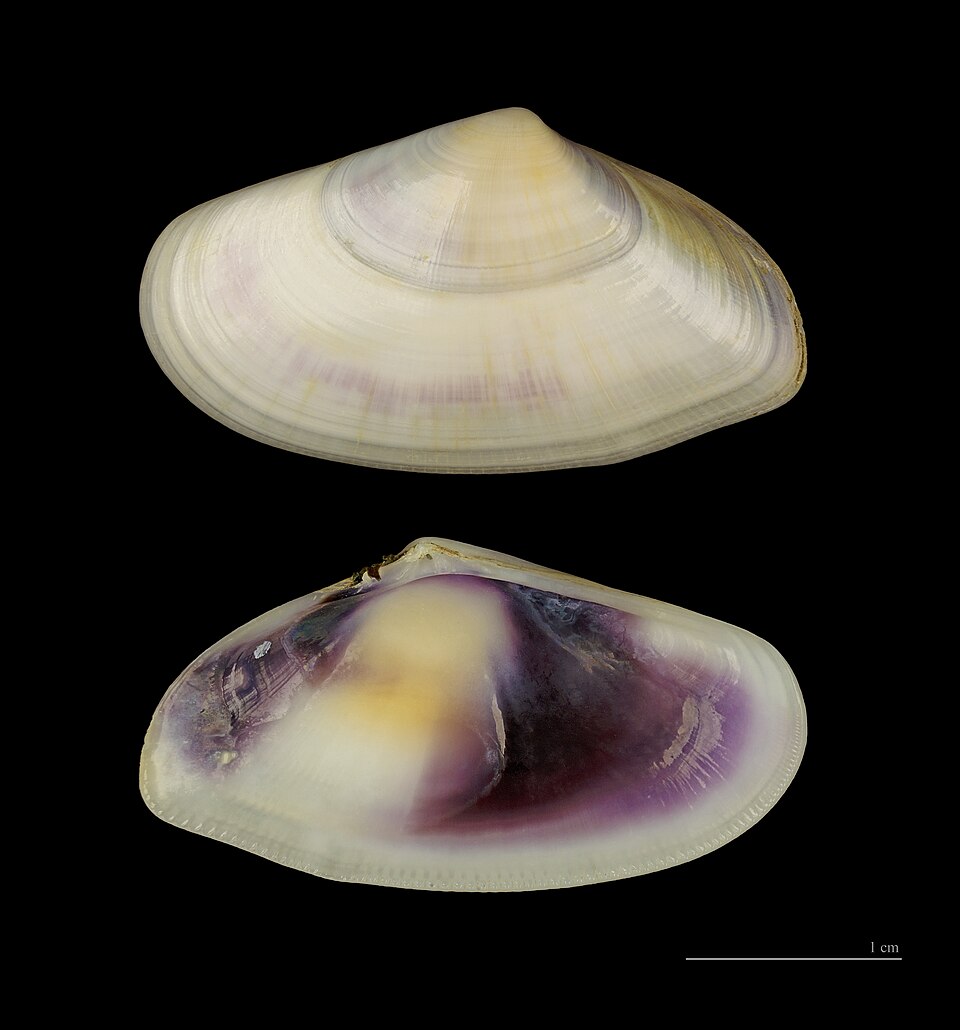
The tellin is a small bivalve mollusk living buried in the sand of beaches and estuaries. Its smooth, thin, colored shell—ranging from white to pink or pale yellow—makes it easy to spot on sandy shores. It is highly valued in the Mediterranean and along Atlantic coasts for its delicate flesh, particularly enjoyed in Tunisia. As a filter feeder, it plays a role in purifying marine sediments and represents a traditional fishing resource for artisanal harvesting.
The tellin has a triangular bivalve shell that is thin and slightly asymmetrical, typically measuring 2 to 4 cm in length. Its outer surface displays fine concentric striations and variable coloring from one individual to another, ranging from pearly white to pale pink. A muscular foot allows it to bury itself quickly in the sand and move about with small jumps.
Characteristics
Indicative values: they vary by subspecies, sex and region.
Habitat and distribution
The tellin prefers fine sand beaches and estuaries subject to tidal movement, where it burrows into the intertidal zone. It favors shallow, well-oxygenated waters rich in organic matter. It is found both in the Mediterranean and along Atlantic coasts in similar sandy habitats.
CURRENT RANGE
The tellin is present along the coasts of the Eastern Atlantic, the Mediterranean, and certain African coastal zones. In Tunisia, it is notably harvested on the beaches of the Gulf of Gabès and the northern coast. Its distribution depends heavily on the sandy nature of coastal seafloors.
Behaviour
A benthic and sedentary animal, the tellin lives buried a few centimeters beneath the sand, where it remains for most of the time. It is sensitive to water movement and can shift slightly to follow the tide by contracting its foot. It responds to vibrations by burrowing deeper to protect itself from predators.
Reproduction
Reproduction occurs through external fertilization, with individuals releasing male and female gametes into seawater. Planktonic larvae develop in open water before settling and burrowing into sand once they metamorphose into juveniles. Sexual maturity is reached within one to two years depending on environmental conditions.
Peculiarities
The tellin is capable of burrowing very rapidly into sand using its muscular foot, thus escaping many predators. Its thin, colored shell is often collected by beachgoers, regardless of its food value. It is also an indicator of coastal sediment quality because of its sensitivity to pollution.
Threats and conservation
Overfishing and degradation of sandy coastal habitats, particularly through coastal development, locally threaten tellin populations. Pollution of coastal waters and changes in sediment quality can also affect its reproduction and survival. Prudent management of artisanal fishing is recommended to preserve stocks.
Numbers and trends vary across sources and regions. See the IUCN assessment for the latest reference data.
Gallery
1 documented photographs.
References
Profile updated 30 August 2026 · Reviewed by the TunisieVet editorial team.
Comments (0)
No comments yet.
CONSERVATION STATUS
Least concern (LC)
IUCN source, latest published assessment.
Species health
Documented diseases for this species.
This information is provided for educational purposes only and is not a substitute for a veterinary consultation. If you have any concerns about your animal's health, consult a veterinarian.
Similar animals
Other species documented in Animalpedia.

Be among the first to use our app. Sign up and get early Google Play access.
Discover