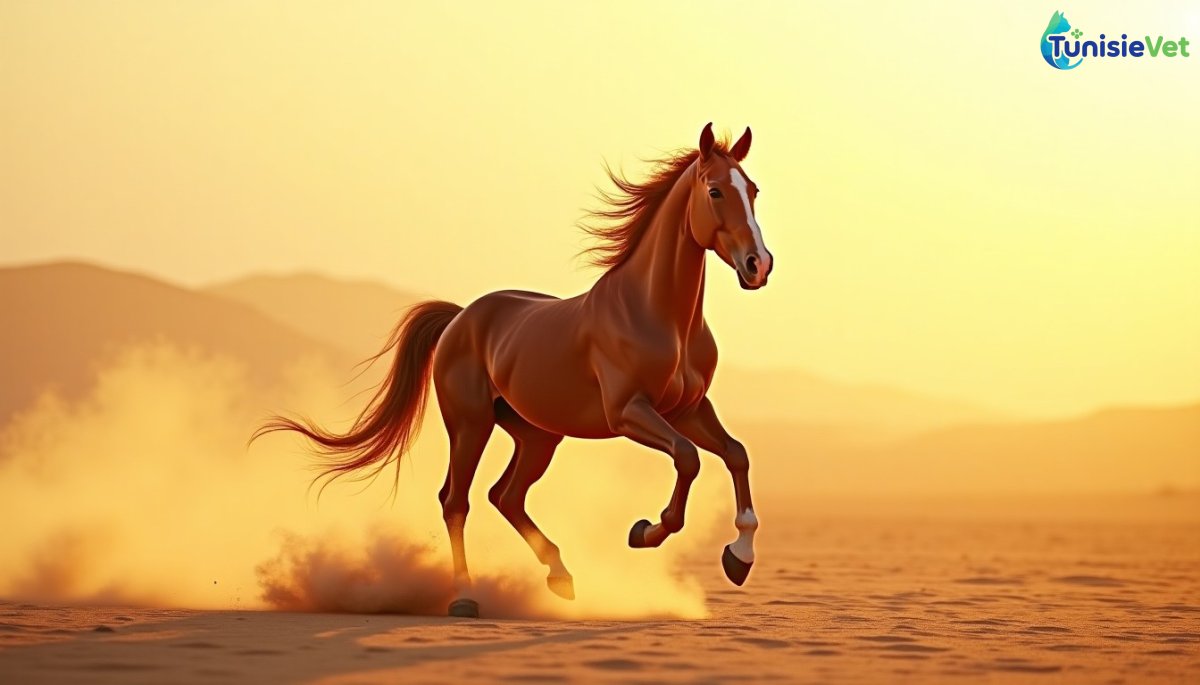
Symbols of strength, loyalty, and beauty, horses traverse the Qur'an and prophetic tradition as creatures beloved of God, associated with the courage of the faithful and the generosity of their masters.
Among all the creatures mentioned in the Qur'an, the horse holds a distinct place. It is not simply described as an animal useful to man: it is presented as a blessing, a companion in battle, and even the subject of a divine oath in an entire surah bearing the name of galloping horses.
A Divine Oath on the Horses
Surah Al-'Adiyat ("The Chargers") opens with a solemn oath sworn by horses launched into combat, whose breath echoes in the darkness and whose hooves strike sparks from the stones. God swears by these horses to remind man of his ingratitude toward his Lord. The very choice of this oath reveals the importance given to this animal: few are the creatures cited thus at the opening of a surah.
According to the exegetes, this image evokes riders setting out at daybreak for a raid or expedition, the dust stirred up by the hooves symbolizing valor and effort. The horse becomes a metaphor for strength in service of a just cause, and its endurance recalls that which the believer must bring to his own path toward good.
The Horse, a Sign of Divine Generosity
In Surah An-Nahl, the Qur'an enumerates the blessings granted to men among domesticated animals, mentioning horses, mules, and donkeys as means of transport and as adornment.
﴿ وَٱلْخَيْلَ وَٱلْبِغَالَ وَٱلْحَمِيرَ لِتَرْكَبُوهَا وَزِينَةً ۚ وَيَخْلُقُ مَا لَا تَعْلَمُونَ ﴾
"And the horses, the mules, and the donkeys so that you may ride upon them, and as an adornment. And He creates what you do not know."
(Surah An-Nahl, verse 8)
This verse associates the horse with two functions: the practical utility of transport and beauty, the "adornment," as if God reminds us that creation is not merely functional, but also a source of aesthetic wonder for man.
The Prophet's ﷺ Love for Horses
Prophetic tradition confirms this privileged place. It is reported in Sahih al-Bukhari that the Prophet ﷺ held a particular affection for horses and encouraged their good treatment, even evoking the blessings attached to their mane until the Day of Resurrection, in reference to their use for good and legitimate defense.
Several authentic hadiths likewise recall the obligation to feed and water horses properly, never to exhaust them needlessly, and to recognize in them creatures deserving respect and gentleness, just as with every living being entrusted to man's responsibility.
A Place That Invites Reflection
Between the solemn oath of Al-'Adiyat and the generous mention in An-Nahl, the horse appears in the Qur'an as a symbol of energy, loyalty, and beauty bestowed by God upon humanity. It also embodies a lesson in gratitude: to receive such a companion, capable of such endurance and grace, calls for thankfulness toward the Creator rather than pride.
This special place granted to the horse in sacred texts invites us, even today, to treat all animals with the kindness they deserve: to feed them with care, never to overtax them, and to see in each one a sign of divine generosity entrusted to our responsibility.