StoryFarmland & grasslandsUrban environmentMercy towards animals
Why does Islam place such emphasis on mercy toward animals?
A thirsty dog, a deep well, a man without water: from this simple account found in the hadith collections emerges one of Islam's most profound lessons on the value of all sentient life.
3 min read · Published 2 weeks ago · 25 views
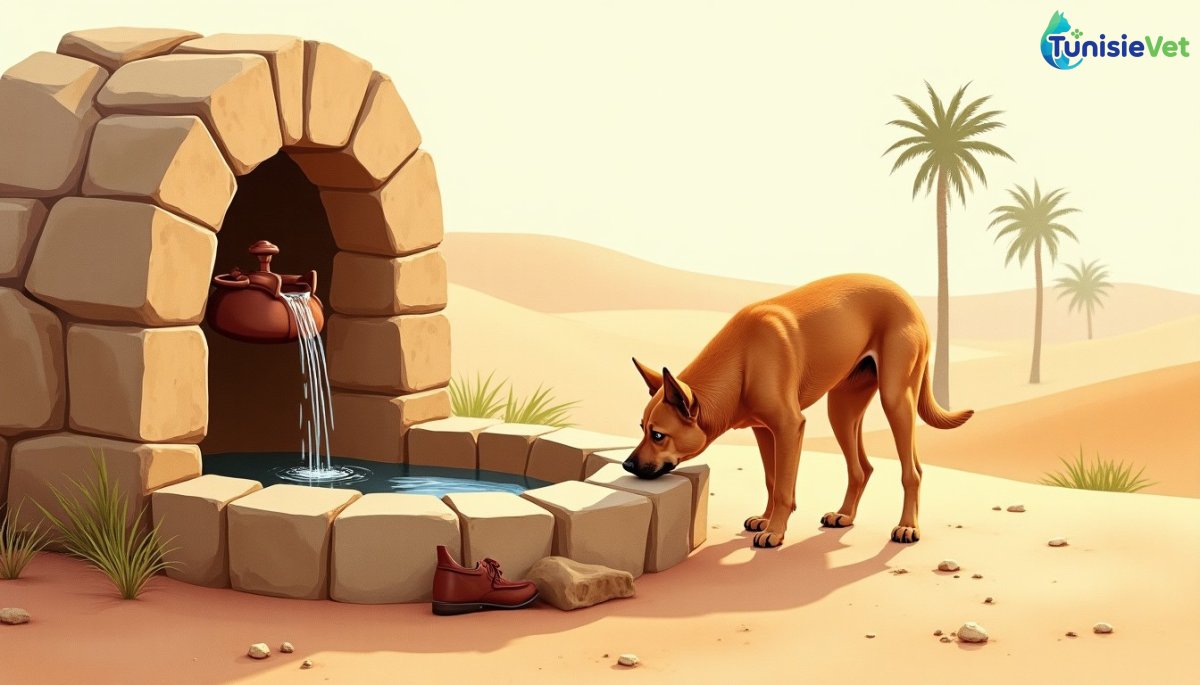
It is reported in an authentic hadith that a man was walking along a road when he became seized by intense thirst. Catching sight of a well, he climbed down into it, drank until he had quenched his thirst, and climbed back out. It was then that he saw a dog panting and licking the damp earth, so great was the animal's thirst. The man said to himself, "This beast is feeling what I have just felt." He climbed back down into the well, filled his shoe with water, held it between his teeth as he climbed back up, and gave the dog a drink. The Prophet ﷺ recounted that God, pleased with this deed, forgave the man his sins. This account is recorded in Sahih al-Bukhari and Sahih Muslim.
A mercy that knows no boundary
This hadith is often cited as the foundation for the attitude Islam recommends toward animals, whatever they may be. The Companions of the Prophet ﷺ, upon hearing this account, asked, "O Messenger of God, is there a reward for us in treating animals well?" He replied, according to the transmitted tradition: "In every living being with a moist liver, there is a reward." This formula, repeated in several hadith collections, means that every living creature—not only humankind—deserves compassion and care.
Publicité
Publicité
The Quran itself mentions the place of animals in creation on several occasions, reminding us that they form, like human beings, organized communities. In Surah Al-An'am, it is stated that there is no beast on earth nor any bird that flies on its wings except they are communities like your own. This verse invites believers to recognize in the animal world a dignity of its own, willed by the Creator, and not merely a backdrop placed at man's disposal without limit.
A counterexample for better understanding
In contrast to the account of the dog, it is also reported in Sahih al-Bukhari, the story of a woman who was punished for confining a cat without giving it food or allowing it to hunt for sustenance, until the animal died. This hadith completes the first one: mercy is not simply a matter of occasional generous gestures; it also means never causing unnecessary suffering to a creature in one's care, no matter how humble it may be.
These two accounts, opposite in their outcome, together trace the same requirement: whoever has power over an animal—whether it be to feed it, give it water, or simply not obstruct it—bears a moral responsibility before God. This is not merely a piece of advice on good conduct, but a principle directly tied to God's judgment of each person's actions.
If Islam places such emphasis on this mercy, it is because it is presented as one path among others toward divine forgiveness, accessible to all, in complete simplicity, through an act as humble as giving water to a thirsty beast. It is also a way of recalling that the value of an action is measured not by its apparent magnitude, but by the intention and compassion that animate it.
Even today, this message remains wholly relevant: ensuring that an animal has water, food, decent shelter, or simply not mistreating it, remains an act of faith just as much as an act of kindness. To care for the creatures around us, even the most modest, is to perpetuate that universal mercy Islam places at the heart of the relationship between man and the living.