
Presentation
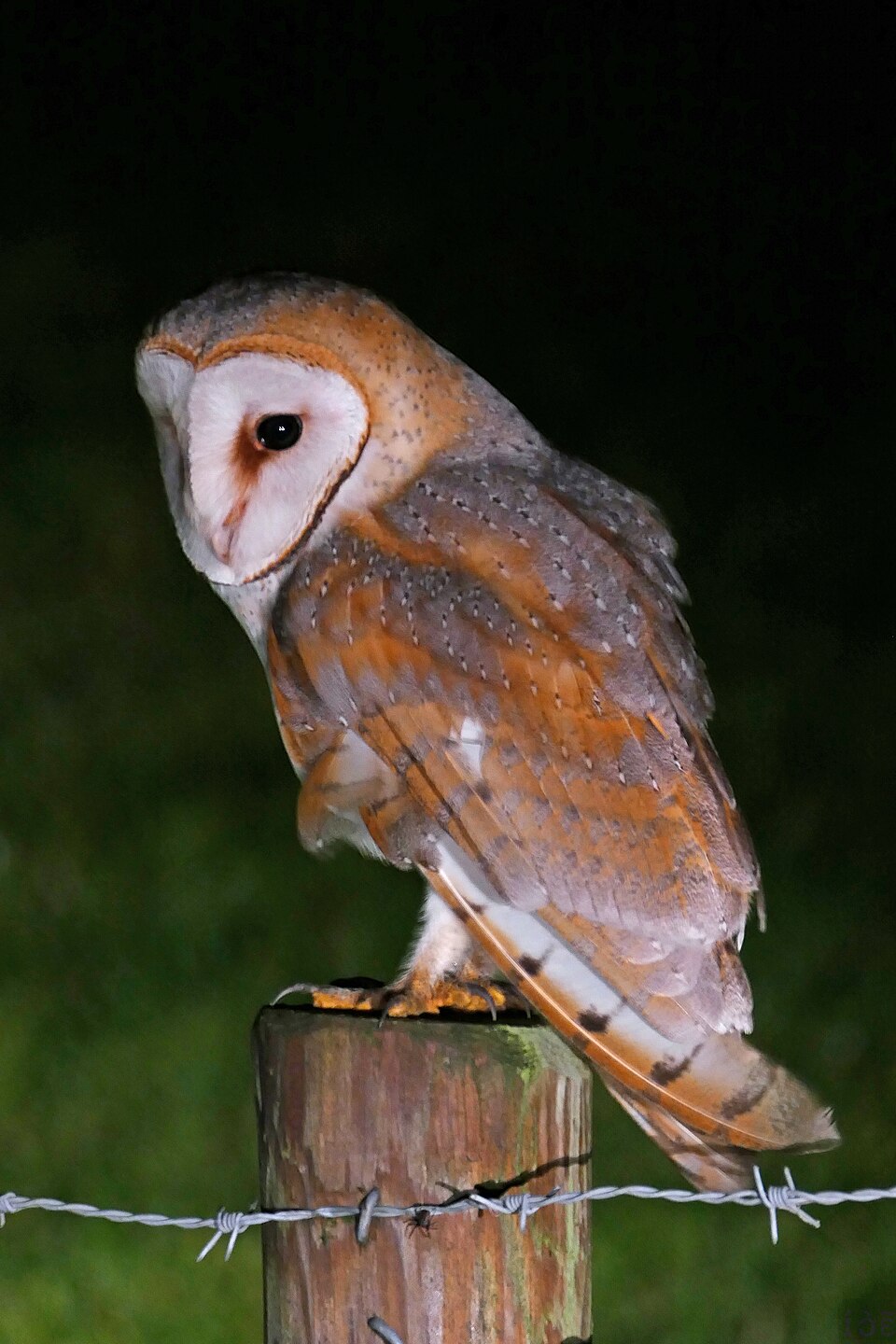
The Barn owl is a distinctive nocturnal bird of prey with a ghostly appearance, recognizable by its white heart-shaped face. It is one of the most widespread species of owls in the world, adapted to nocturnal hunting thanks to its keen senses and silent flight.
The Barn owl has a white heart-shaped face surrounded by golden or reddish feathers. Its eyes are large and directed forward, adapted for night vision, while its asymmetrical external ears allow it precise acoustic location of prey. Its plumage is finely marked with gray and white.
Characteristics
Indicative values: they vary by subspecies, sex and region.
Habitat and distribution
Barn owl frequents open forests, farms, meadows and agricultural areas. It adapts well to urban and peri-urban environments where it nests in attics, bell towers and similar structures. It avoids dense forests and prefers semi-open landscapes which will facilitate hunting.
CURRENT RANGE
The Barn owl is one of the most widely distributed bird species in the world, occurring on every continent except Antarctica. It is found in North Africa, Europe, Asia, America and Australia, adapting to various latitudes and climatic conditions.
Behaviour
Primarily nocturnal, the Barn owl hunts by flying low over fields and meadows, guided by hearing rather than sight. It is solitary outside the breeding season, although pairs sometimes stay together out of season. Its characteristic call is a piercing, prolonged cry.
Reproduction
Barn owl breeds mainly in spring. The female lays 4 to 7 eggs in a nest located in a tree cavity, attic, barn or rock crevice. Incubation lasts approximately 29 to 34 days and the young fledge after 50 to 60 days of rearing. Both parents engage in parental care.
Peculiarities
The Barn owl has extraordinary hearing, capable of detecting ultrasound and locating prey in complete darkness thanks to its asymmetrical ears. Its flight is remarkably silent thanks to the special structure of its feathers. It regurgitates pellets containing the remains of indigested prey.
Threats and conservation
Barn owl has no major threats and maintains stable populations. However, it may be affected locally by the loss of nesting habitats and the use of pesticides which reduce its prey.
Numbers and trends vary across sources and regions. See the IUCN assessment for the latest reference data.
Gallery
1 documented photographs.
References
UICN — Liste rouge des espèces menacées
Profile updated 28 August 2026 · Reviewed by the TunisieVet editorial team.
Comments (0)
No comments yet.
CONSERVATION STATUS
Least concern (LC)
IUCN source, latest published assessment.
Species health
Documented diseases for this species.
See the 4 diseases of this species Find a veterinarianThis information is provided for educational purposes only and is not a substitute for a veterinary consultation. If you have any concerns about your animal's health, consult a veterinarian.
Related species
To discover around: Barn owl
Videos, facts, stories and records linked to this species.
Similar animals
Other species documented in Animalpedia.

TunisieVet in your pocket 📱🐾 Access your veterinary services wherever you are. [ Download the app ]
Learn more