
Presentation
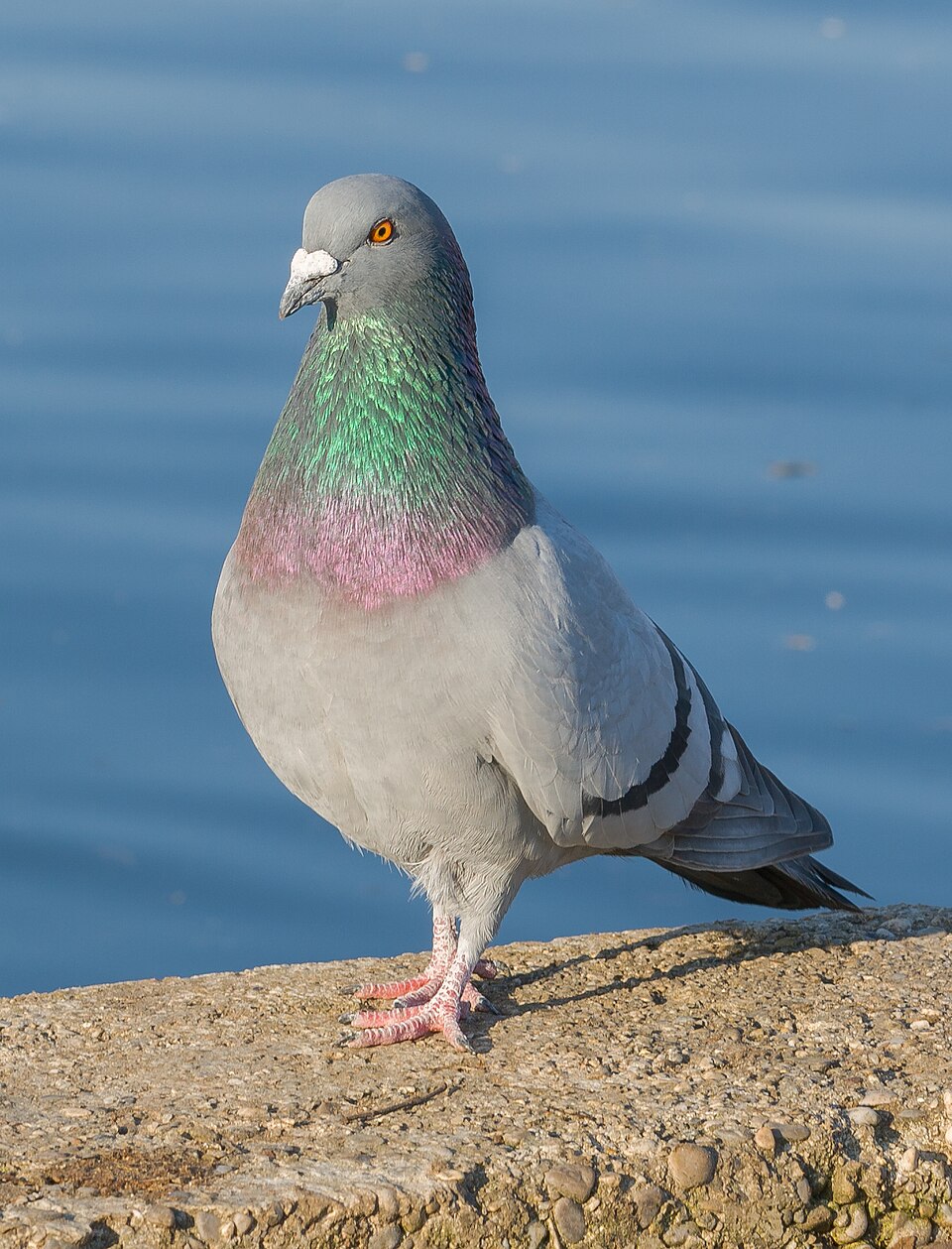
The dove is a small to medium-sized bird belonging to the columbid family, which includes several wild and domestic species closely related to pigeons. Its plumage ranges from pure white to grey-beige depending on the breed and species, with a stocky body and a small head. It is found on nearly every continent, in both natural and urban settings. In Tunisia, several dove and turtle dove species live in the wild or are raised for ornamental and symbolic purposes. Its swift, silent flight and distinctive cooing call make it an easily recognizable bird. Since ancient times, it has been associated in many cultures with symbols of peace and faithfulness.
The dove has a slender, slightly curved beak and short legs suited for walking on the ground. Its dense plumage allows it to maintain sustained flight over long distances. It differs from pigeons mainly in its smaller size and often lighter-coloured plumage.
Characteristics
Indicative values: they vary by subspecies, sex and region.
Habitat and distribution
Doves inhabit both rural and agricultural areas as well as urban environments where they seek refuge on buildings. Some wild species nest in forests, cliffs, or semi-arid zones. They readily adapt to proximity with humans.
CURRENT RANGE
Doves and doves are distributed across nearly every continent, with strong diversity in Africa, Asia, and Europe. Some domestic species have been introduced worldwide through breeding. In Tunisia, several wild species are observed year-round or as migratory visitors.
Behaviour
The dove is a gregarious bird that often lives in pairs or small groups. It is known for its calm temperament and attachment to its mate, typically remaining monogamous over the long term. Cooing serves as communication between partners and for defending the nesting territory.
Reproduction
The female typically lays one to two white eggs per clutch, incubated alternately by both parents for approximately two weeks. Young are fed on 'crop milk,' a nutrient-rich secretion produced by the parents' crop. Several clutches may occur in succession throughout the year depending on climatic conditions.
Peculiarities
Crop milk produced by both parents to feed nestlings is a rare feature among birds. The dove is capable of navigating over very long distances, an ability exploited since antiquity for the homing pigeon. It is also a universal symbol of peace.
Threats and conservation
Wild dove species may be threatened by loss of natural habitat and hunting in certain regions. Urban and domestic populations are generally not threatened. Pollution and pesticide use indirectly affect available food resources.
Numbers and trends vary across sources and regions. See the IUCN assessment for the latest reference data.
Gallery
1 documented photographs.
References
Profile updated 06 September 2026 · Reviewed by the TunisieVet editorial team.
Comments (0)
No comments yet.
CONSERVATION STATUS
Least concern (LC)
IUCN source, latest published assessment.
Species health
Documented diseases for this species.
See the 4 diseases of this species Find a veterinarianThis information is provided for educational purposes only and is not a substitute for a veterinary consultation. If you have any concerns about your animal's health, consult a veterinarian.
Similar animals
Other species documented in Animalpedia.

TunisieVet in your pocket 📱🐾 Access your veterinary services wherever you are. [ Download the app ]
Learn more