
Presentation
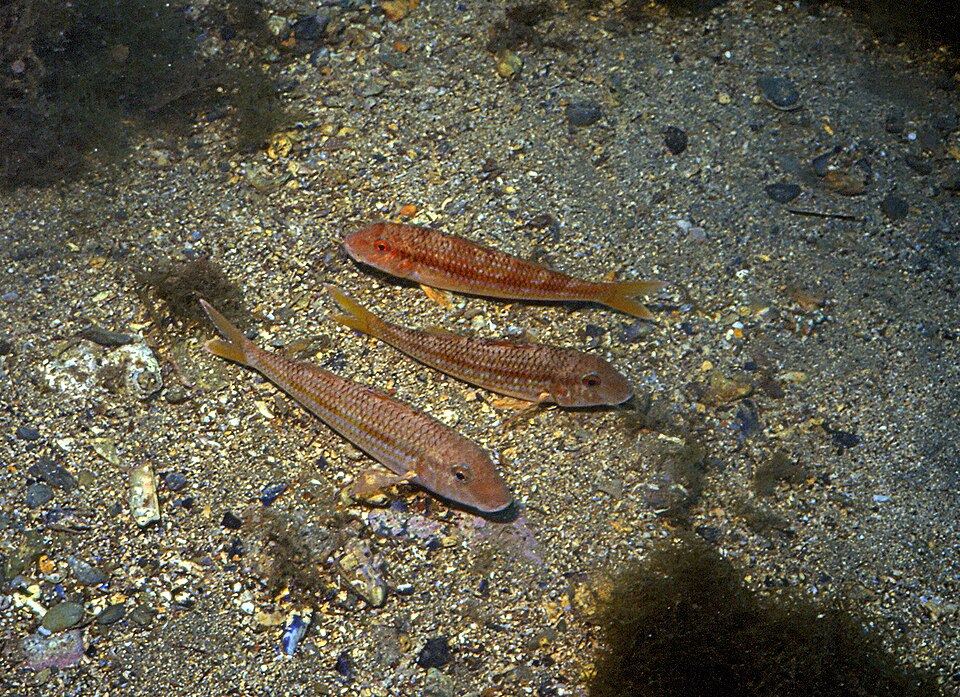
Red mullet is a coastal marine fish appreciated for its fine flesh, present in the Mediterranean and the near Atlantic. It is distinguished by its pinkish-red color and two long barbels under its chin which it uses to detect its prey in the sand. Two species are commonly called Red mullet: rock Red mullet and mud Red mullet. This fish lives near sandy or rocky bottoms, often at shallow depths. It is highly sought after by artisanal fishing and occupies an important place in Tunisian and Mediterranean gastronomy.
The Red mullet has an elongated and slightly compressed body, red to pink in color with sometimes golden highlights. Its head bears two sensory barbels under the lower jaw, used to search sediment. It generally measures between 15 and 30 cm as an adult. Its scales are large and shiny, easily detachable.
Characteristics
Indicative values: they vary by subspecies, sex and region.
Habitat and distribution
The Red mullet frequents sandy, muddy or rocky bottoms of shallow coastal areas. It is often found near seagrass beds and in the coastal waters of the Mediterranean. It can also rise to slightly deeper areas in winter.
CURRENT RANGE
Red mullet is present throughout the Mediterranean as well as the eastern Atlantic, from the Bay of Biscay to the African coast. It is particularly common along the Tunisian coast. Its distribution follows the temperate to warm waters of the coast.
Behaviour
The Red mullet is a benthic fish, living near the seafloor, often in small groups. It is active mainly during the day and moves around searching the substrate in search of food. It shows a preference for shallow coastal waters and sandy or muddy areas.
Reproduction
Reproduction of Red mullet generally occurs in spring and summer, depending on water temperature. The female releases a large number of pelagic eggs which are fertilized in open water. The larvae then develop in the plankton before reaching the coastal depths.
Peculiarities
The Red mullet's barbels are a highly developed sensory organ, essential for its search for food in sediment. Its red color fades quickly after death, making it an indicator of freshness for fishermen and fishmongers.
Threats and conservation
The Red mullet is subject to significant fishing pressure in the Mediterranean due to its commercial value. The degradation of coastal habitats and marine pollution also affects its local populations. No threat of global extinction is currently documented for the species.
Numbers and trends vary across sources and regions. See the IUCN assessment for the latest reference data.
Gallery
1 documented photographs.
References
Profile updated 29 August 2026 · Reviewed by the TunisieVet editorial team.
Comments (0)
No comments yet.
CONSERVATION STATUS
Least concern (LC)
IUCN source, latest published assessment.
Species health
Documented diseases for this species.
This information is provided for educational purposes only and is not a substitute for a veterinary consultation. If you have any concerns about your animal's health, consult a veterinarian.
Similar animals
Other species documented in Animalpedia.

TunisieVet in your pocket 📱🐾 Access your veterinary services wherever you are. [ Download the app ]
Learn more