
Presentation
The Chicken is one of the most common pets in the world. Originating from the domestication of the bankiva rooster from Southeast Asia, it has been selected for millennia for the production of eggs and meat. Today, hundreds of breeds coexist, offering a great diversity of shapes, colors and abilities.
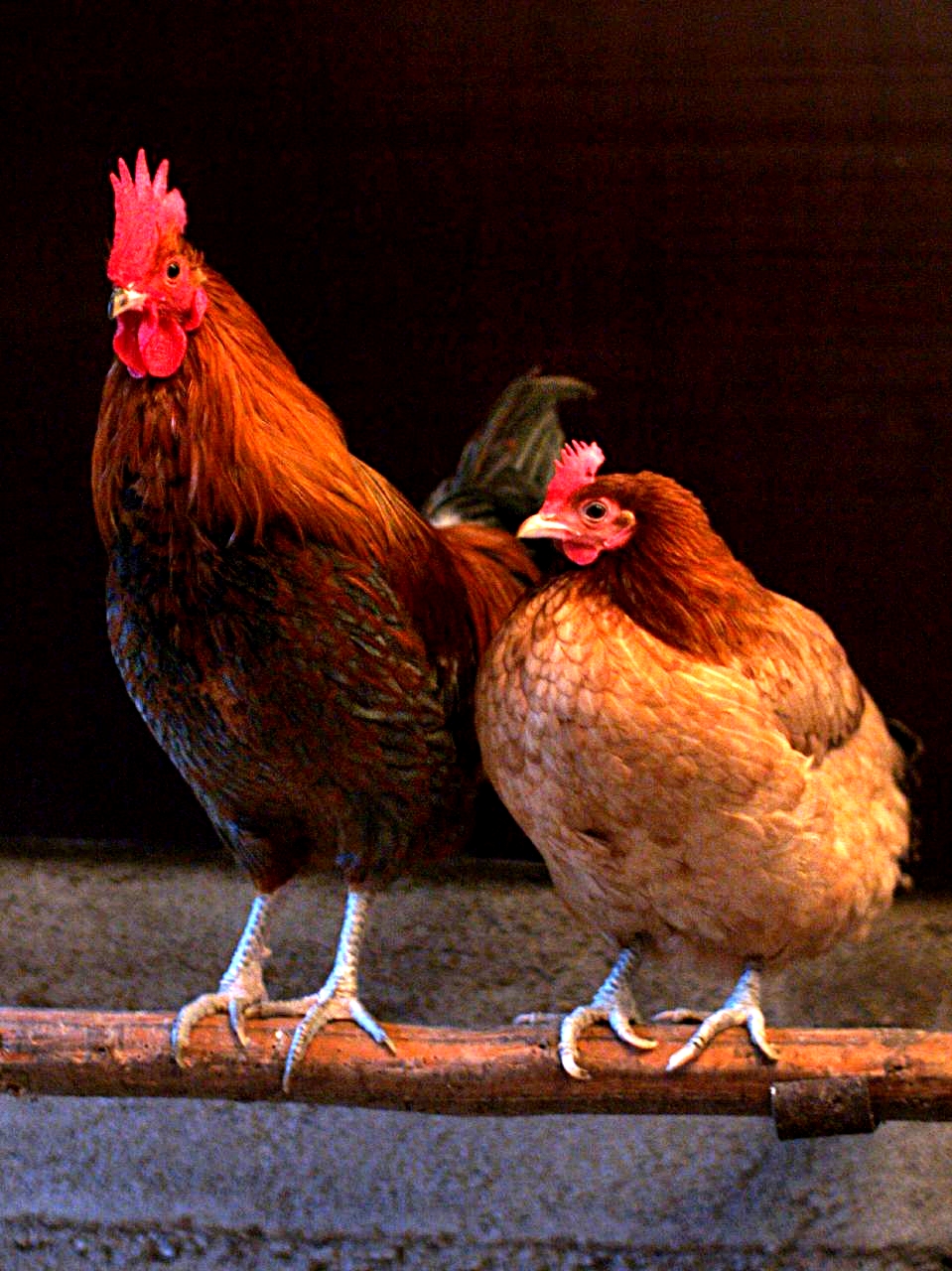
The Chicken has dense and colorful plumage that varies greatly depending on the breed: red, black, white, gray or multicolored. It has a fleshy crest on its head, barbels under its chin, and scaly legs that are generally yellow or gray. Females are smaller and more discreet than roosters.
Did you know?
How can an unbalanced diet cause feather pecking?
Characteristics
BREEDS
Indicative values: they vary by subspecies, sex and region.
Habitat and distribution
The Chicken adapts to many environments. In traditional breeding, it lives in henhouses and open enclosures with access to meadows or grassy areas. It prefers well-drained areas with protection from wind and predators.
CURRENT RANGE
The domestic Chicken is present on all continents. It represents the largest number of domestic birds in the world. The species spread from Southeast Asia following trade routes and human migrations, becoming ubiquitous in agriculture.
Behaviour
Chickens are gregarious and hierarchical, establishing a strict social order called “pecking”. They spend a lot of time digging in the ground and bathing in dust for hygiene. They roast up high at night to protect themselves from predators.
Reproduction
Chickens reach sexual maturity around 5-6 months. An Chicken lays eggs regularly, usually 200 to 300 per year depending on the breed. The eggs hatch after 21 days of incubation. The chicks remain dependent on their mother for a few weeks before independence.
Peculiarities
The Chicken has almost total panoramic vision thanks to the lateral position of its eyes. It communicates through a variety of distinct vocalizations: cackling, clucking, cooing. The rooster has a more developed crest and wattles and utters distinct fighting songs.
Threats and conservation
As a domestic species without IUCN status, Chicken faces no conservation threats. However, intensive breeding raises animal welfare issues and diseases (avian flu) can affect breeding populations.
Numbers and trends vary across sources and regions. See the IUCN assessment for the latest reference data.
Gallery
1 documented photographs.
References
Profile updated 11 August 2026 · Reviewed by the TunisieVet editorial team.
Comments (0)
No comments yet.
CONSERVATION STATUS
Not evaluated (NE)
IUCN source, latest published assessment.
Species health
Documented diseases for this species.
See the 4 diseases of this species Find a veterinarianThis information is provided for educational purposes only and is not a substitute for a veterinary consultation. If you have any concerns about your animal's health, consult a veterinarian.
Did you know? — Chicken
To discover around: Chicken
Videos, facts, stories and records linked to this species.
Similar animals
Other species documented in Animalpedia.

TunisieVet in your pocket 📱🐾 Access your veterinary services wherever you are. [ Download the app ]
Learn more